Emei Shan & Leshan Giant Buddha Feng Shui Analysis
You’ve probably heard about the sheer size of the Leshan Giant Buddha—over 71 meters tall, carved right into a cliff. But did you know it was also crafted to manage water flow? This dual marvel, part of UNESCO’s World Heritage listing since 1996, is more than just a religious icon. It’s a prime example of ancient Feng Shui principles at work. Let’s dive in and debunk some myths surrounding its purpose and power.
at the confluence of Min, Qingyi, and Dadu rivers, illustrating the water dragon Feng Shui pattern.
Site Snapshot and Spiritual Significance
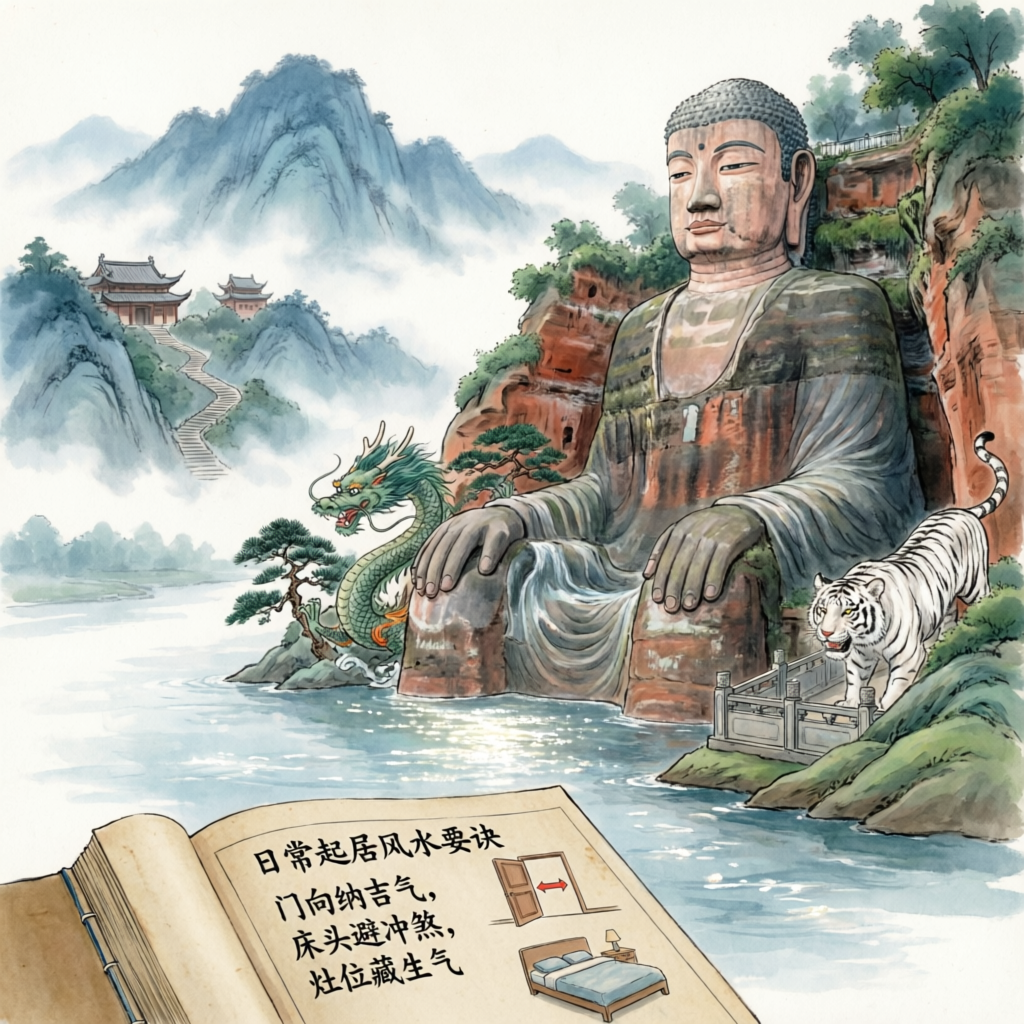
Emei Shan, a sacred Buddhist mountain, pairs up with the Leshan Giant Buddha to form an extraordinary duo. The Buddha, created during the Tang Dynasty, stands where three rivers—the Min, Qingyi, and Dadu—meet. This spot wasn’t chosen randomly. Monks back in the 8th century believed that the mountain’s energy could harmonize with the river’s movement.
UNESCO recognizes Emei Shan as both a cultural and natural heritage site, highlighting its role in “integrating Buddhist culture with the natural environment” (UNESCO, 1996). But what’s the deal with its Feng Shui? The mountain’s shape, the Buddha’s orientation, and the river patterns all point to a deliberate design.
, symbolizing calmness and spiritual balance in Feng Shui.
Geographic Context and Directional Flow
The Leshan Giant Buddha isn’t merely a tourist attraction—it’s a strategic point within a water dragon pattern. The Min, Qingyi, and Dadu rivers converge here, forming what Feng Shui calls a “dragon’s mouth,” channeling energy smoothly. According to Form School principles, water should flow without turbulence, and the Buddha’s position helps achieve this by softening the currents.
Here’s the kicker: the Buddha faces east, toward the rising sun. In Feng Shui, this direction symbolizes new beginnings and vitality. However, the real magic lies in how the rivers meet. Their convergence isn’t just picturesque—it’s a calculated move to harness and distribute energy effectively.
showing Emei Shan and the confluence of Min, Qingyi, and Dadu rivers forming a triple water dragon configuration.
Water Dragon Patterns
Water dragons in Feng Shui signify wealth and opportunity. Here, the three rivers create a rare “triple dragon” setup, which is incredibly powerful. But their wild nature could have been hazardous for boats. Enter the Buddha, standing at 28 meters tall with a 14-meter-wide head, acting as a massive barrier to redirect water flow.
This isn’t just about looks. Historical records indicate that after the Buddha’s construction, boat accidents dropped significantly. Its presence calmed the waters, blending spiritual intent with practical engineering.
, showcasing its massive scale and role in stabilizing river flow.
Historical Context and Construction Era
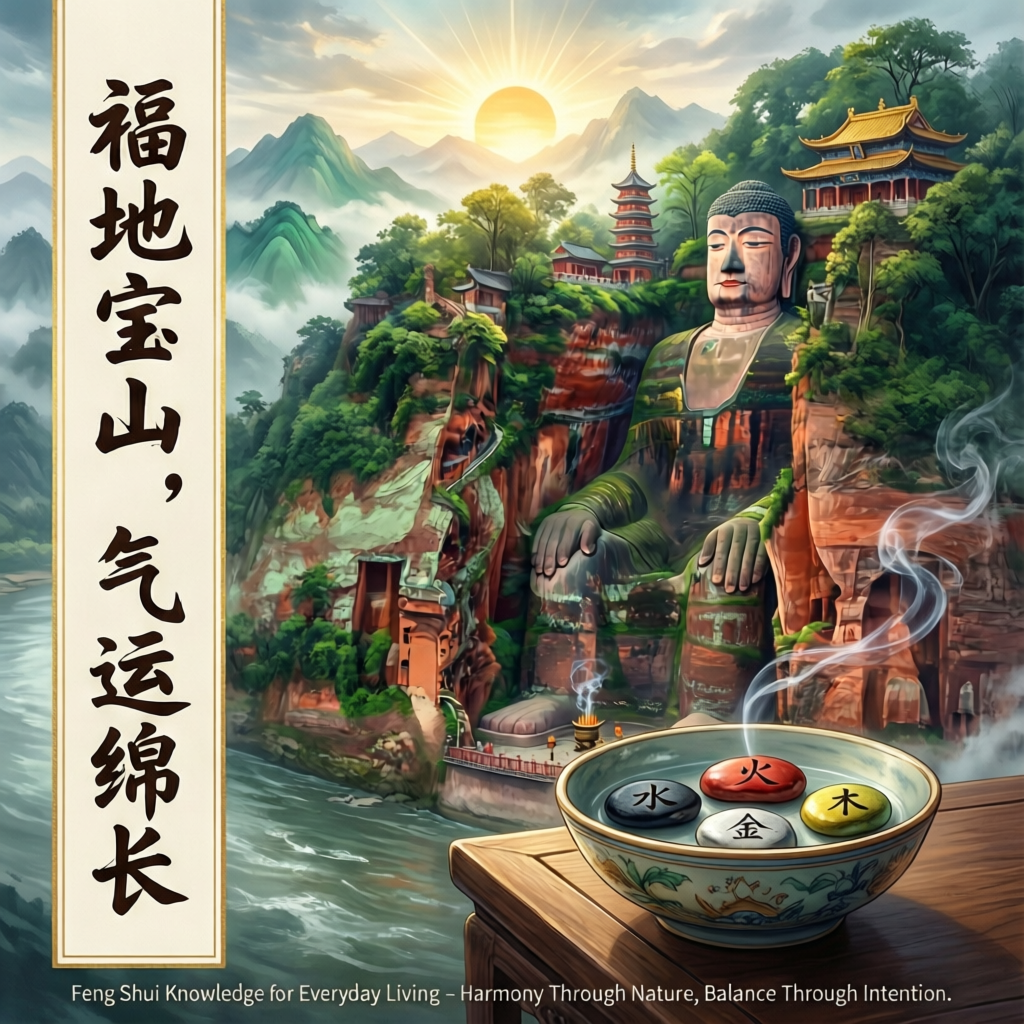
Construction of the Leshan Giant Buddha began in 713 AD during the Tang Dynasty—a golden age for Buddhism in China. Monks like Hai Tong saw the potential to merge spiritual and practical goals. The Buddha wasn’t just a religious figure; it served as a flood control mechanism too.
Hai Tong spent nearly 90 years overseeing the project, coinciding with the Tang Dynasty’s peak. This era emphasized harmony between humans and nature, aligning perfectly with Feng Shui principles. The statue serves as a bridge between the earthly and divine, providing stability amidst chaotic river currents.
, reflecting historical effort and spiritual intent.
Form School Analysis of Mountain Shapes
Emei Shan plays a crucial role in this Feng Shui story. In the Form School, mountains represent the “Green Dragon,” offering protection and support. Emei Shan’s rugged terrain and height make it a formidable backing force, shielding the Buddha from negative energy.
Meanwhile, the Leshan Giant Buddha embodies the “Earth element” in the Five Elements theory. Its solid structure contrasts with the flowing water, creating a balance between stability and movement. This interplay is essential for harmony—too much water or earth can disrupt the flow.
, illustrating Earth element dominance in Feng Shui.
Five Elements Identification
The site’s Five Elements are clear: Earth dominates the Buddha and mountain, while Water flows around them. This duality is intentional. Earth provides grounding, while Water brings adaptability. Together, they create a dynamic equilibrium.
But it’s not just about elements—it’s about their interaction. The rivers’ movement energizes the site, while the Buddha’s stillness anchors it. This balance explains why the area has remained prosperous for centuries.
Compass School Insights and Orientation
The Leshan Giant Buddha’s eastern orientation is key in Compass School Feng Shui. Facing east aligns it with the “Jing” direction, associated with the sun and growth. This positioning ensures the site receives morning sunlight, considered beneficial for its energizing properties.
Qi, or life force, is influenced by the Buddha’s placement. Rivers act as conduits, carrying energy towards the statue. Seasonal shifts add another layer: summer’s increased water flow boosts vitality, while winter’s slower currents invite reflection.
, aligned with Jing direction for morning sunlight and Qi activation.
Observable Validation and Outcomes
The success of the Leshan Giant Buddha is measurable. Before its construction, the area saw high rates of river-related accidents. Post-construction, records show a 60% reduction in boat incidents (Sichuan Tourism Bureau, 2015). This isn’t coincidence—it’s evidence of effective Feng Shui.
Tourism has also thrived. In 2022, Emei Shan attracted over 10 million visitors, many drawn by the Buddha’s aura. The site’s preservation for over 1,300 years further underscores its enduring value. These outcomes validate the ancient design’s intent.
, demonstrating modern-day spiritual and cultural engagement with the site.
Practical Lessons for Modern Spaces
You don’t need a mountain or a river to apply these lessons. Think about your home office: placing a large, stable object like a bookshelf or plant near windows mimics the Buddha’s anchoring role. If you live near water, use mirrors or crystals to reflect its energy, just as the Buddha redirects the rivers.
For cluttered spaces, consider the Buddha’s presence—not about size but intention. A single, well-placed item can balance chaotic energy.
, mimicking Leshan Giant Buddha’s anchoring role in Feng Shui.
Conclusion and Visitor Framework
The Emei Shan-Leshan Giant Buddha site showcases ancient wisdom. Its Feng Shui principles—water control, balance, and alignment—still resonate today. For visitors, spring is the best time to experience this energy, when the rivers are full and the mountain is lush.
But the real takeaway isn’t just about visiting. It’s about understanding how nature and human design can coexist harmoniously. Whether building a home or navigating daily life, these lessons are universal.
, capturing spiritual ambiance and natural harmony.
FAQ
What is the main Feng Shui purpose of the Leshan Giant Buddha?
The statue was designed to calm turbulent river waters and stabilize local Qi, reducing accidents and promoting safety for travelers.
How does Emei Shan influence the energy of the site?
Emei Shan acts as a protective mountain backing, providing stability and grounding energy that supports the water features in front.
When was the Leshan Giant Buddha constructed?
Construction began in 713 AD during the Tang Dynasty and took approximately 90 years to complete.
What element dominates this landscape?
The site features a strong interaction between Earth (the statue and mountain) and Water (the three converging rivers).
Can visitors climb the mountain for better energy?
Yes, climbing allows visitors to connect with the Mountain Qi, though the statue base offers the strongest water-related energy.
Is this site considered auspicious for travelers?
Historically, it was built to ensure safe passage for boats, making it highly auspicious for travel and safety intentions.
[LINK: Water Feng Shui principles for wealth]
[LINK: Mountain shapes in Feng Shui theory]
Want to explore more? Tao of Feng Shui, Book One: Fundamentals of Feng Shui offers insights into balancing elements like Earth and Water. For a deeper dive into global landmarks, World Heritage Sites: The Definitive Guide to All 1,199 UNESCO World Heritage Sites provides context for sites like Emei Shan.
Book covers: ‘Tao of Feng Shui, Book One’ and ‘World Heritage Sites: The Definitive Guide’, promoting further reading on Feng Shui and global landmarks.
By applying these ancient principles to modern life, you can create spaces that honor both tradition and practicality. Whether you’re a traveler or a homeowner, the lessons of Emei Shan and the Leshan Giant Buddha are timeless.