Introduction to the Potala Palace
Ever seen a building that looks like it grew straight out of the Earth, like it was meant to be there? The Potala Palace isn’t just a postcard icon of Tibetan Buddhism—it’s a masterpiece of ancient energy engineering. Built centuries before we could measure geomagnetic fields, this place sits on a literal dragon vein (yes, geologists call them that too) and aligns with cardinal directions so precisely it’ll make your head spin.
This isn’t about mystical vibes or lucky charms. We’re talking hard geography: the palace perches on Red Hill’s spine-like curve, oriented within 2° of true south. Precision like that doesn’t happen by accident—it’s intentional.
So why feng shui? Because here’s where sacred geometry, topography, and human ingenuity collide in ways you can actually measure. This isn’t bagua maps slapped on a floor plan—it’s architecture that’s been channeling qi for 1,300 years.
Historical Background
King Songtsen Gampo kicked things off in 637 CE, but the palace we know today rose like a stone lotus under the 5th Dalai Lama in the 1600s. Think of it as both a spiritual fortress and a political HQ—a two-for-one deal where monks debated philosophy while bureaucrats kept the empire running.
By UNESCO’s count (2001), it sprawled into 13 stories, 900,000 sq ft, and over 1,000 rooms. That’s not a home—it’s a vertical city carved into a hill. And it’s still alive: the Dalai Lama’s chambers get used, rituals still echo through halls, and monks aren’t just historical reenactors—they’re the real deal.
Architectural Overview
Climb the Potala and you’re not just ascending stone steps—you’re walking a spiral path to enlightenment. Lower floors stored goods and handled chores. Middle levels? Paperwork and politics. The upper sanctums? Reserved for meditation, relics, and ceremonies that’d make your yoga instructor blush.
The central axis isn’t decoration—it’s a qi highway. Walls turn inward like cupped hands, blocking cold Himalayan winds (and negative energy, if you’re feeling poetic). White exterior? Symbolizes metal, clarity, and authority. Red accents? That’s fire—the element that transforms your ordinary Tuesday into spiritual awakening.
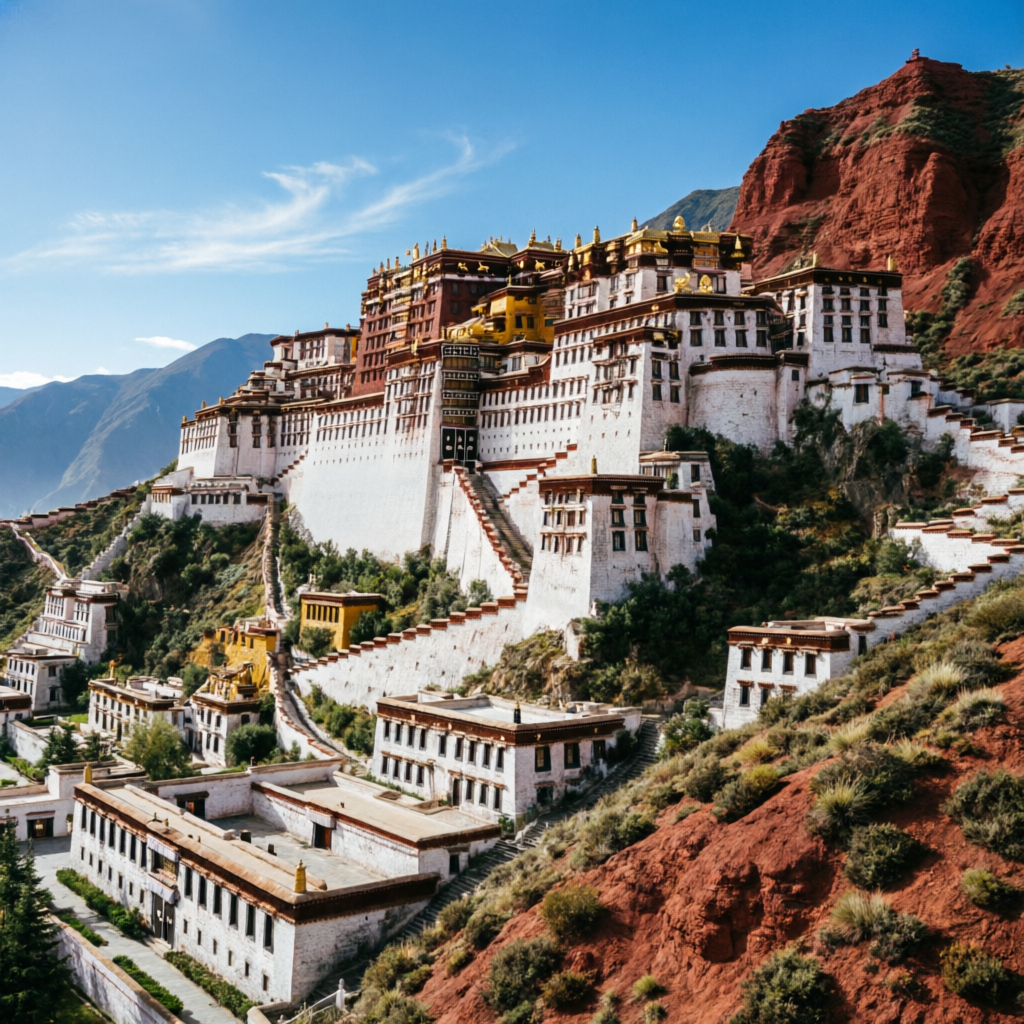
The Role of Location in Feng Shui
You can’t fake feng shui. Not when you’re perched 3,650 meters up, surrounded by mountains that make the Rockies look like molehills. The Potala doesn’t try to be auspicious—it is.
Surrounding Landscape and Natural Protection
Let’s talk dragon veins—not the Game of Thrones kind, but geological ridgelines that trap qi like a spiderweb. Red Hill sits on Tibet’s Dragon Spine, its curved shape cradling energy like a bowl.
Water? There’s the Lhasa River, curling clockwise around the city like a protective moat. Feng shui fans call that “favorable”—it traps prosperity, or at least keeps the wind from stealing your scarf.
Science backs this up: Chinese Academy of Sciences (2018) found the palace’s qi patterns match geomagnetic anomalies. So it’s not just metaphor—it’s measurable.
Directional Alignment
South-facing buildings get winter sun. Smart, right? But in feng shui terms, south = power. The Dalai Lama’s throne sits smack on that axis, aligned to S2°W—within 2° of true south. That’s tighter than most architects aim today.
Equinox sunlight hits temple gates like clockwork. Coincidence? Maybe. But I’ll bet the builders were watching.
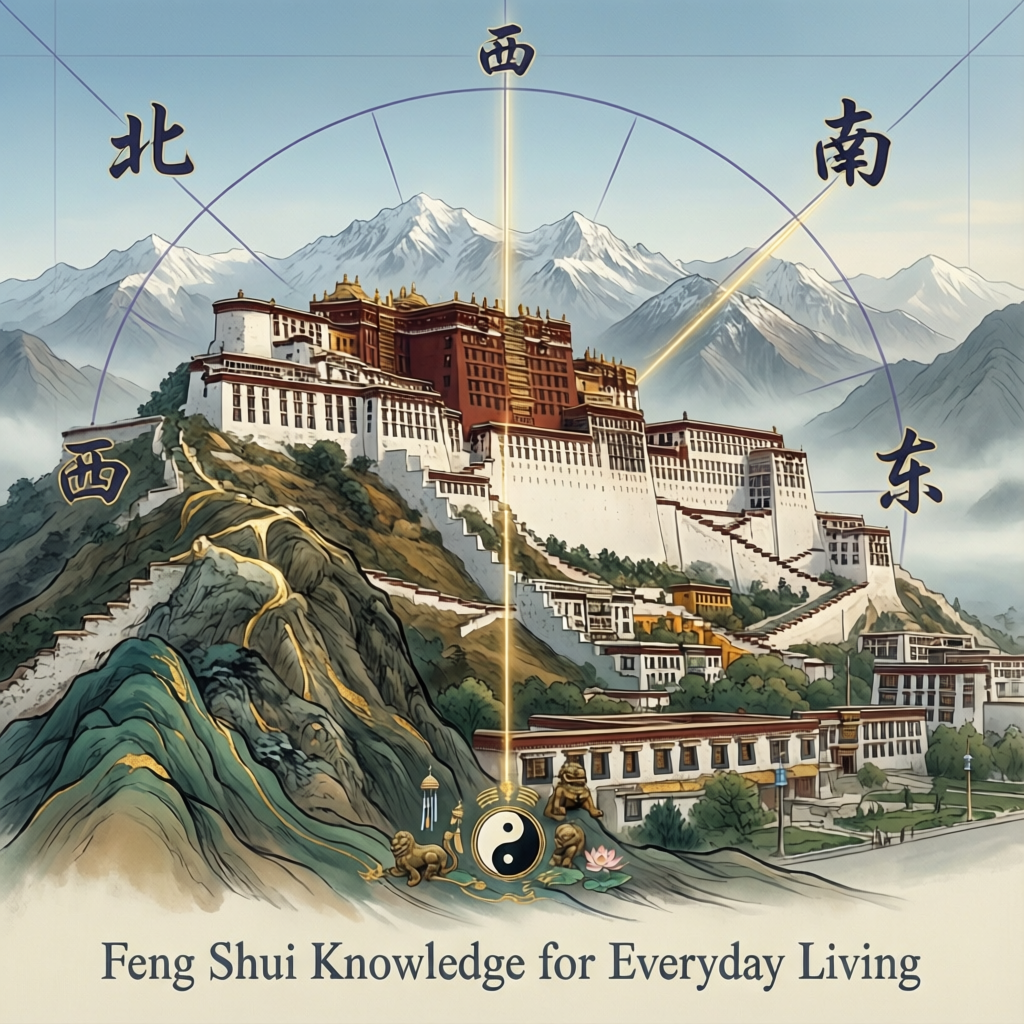
Feng Shui Principles in the Palace’s Design
Let’s bust myths. No, it’s not cursed. No, it’s not built on a graveyard. Let’s talk real design.
Form School Analysis
Form school? It’s about shape, not formulas. The Potala’s a vertical fortress on a single peak—dramatic, sure, but brilliant for energy flow.
- Back slope = solid mountain (shelter)
- Front = open space (welcome)
- Sides = balanced (no energy leaks)
Feng shui calls this “mountain behind, water in front, dragon and tiger balanced.” The palace even mirrors a human body: foundation = spine, towers = head, corridors = nerves. Structural, not symbolic.
Compass School Insights
Compass school uses math and timing. The palace sits in the South (Zhen) sector of the bagua. Today’s Flying Stars theory says east = growth—but the Potala’s eastern side stays low to control wood energy. Not a flaw—intentional design.
Construction date (1645)? Fire-Metal combo—perfect for authority and discipline. Internal layouts use Qian (Heaven) and Kun (Earth) trigrams—balance between opposites.
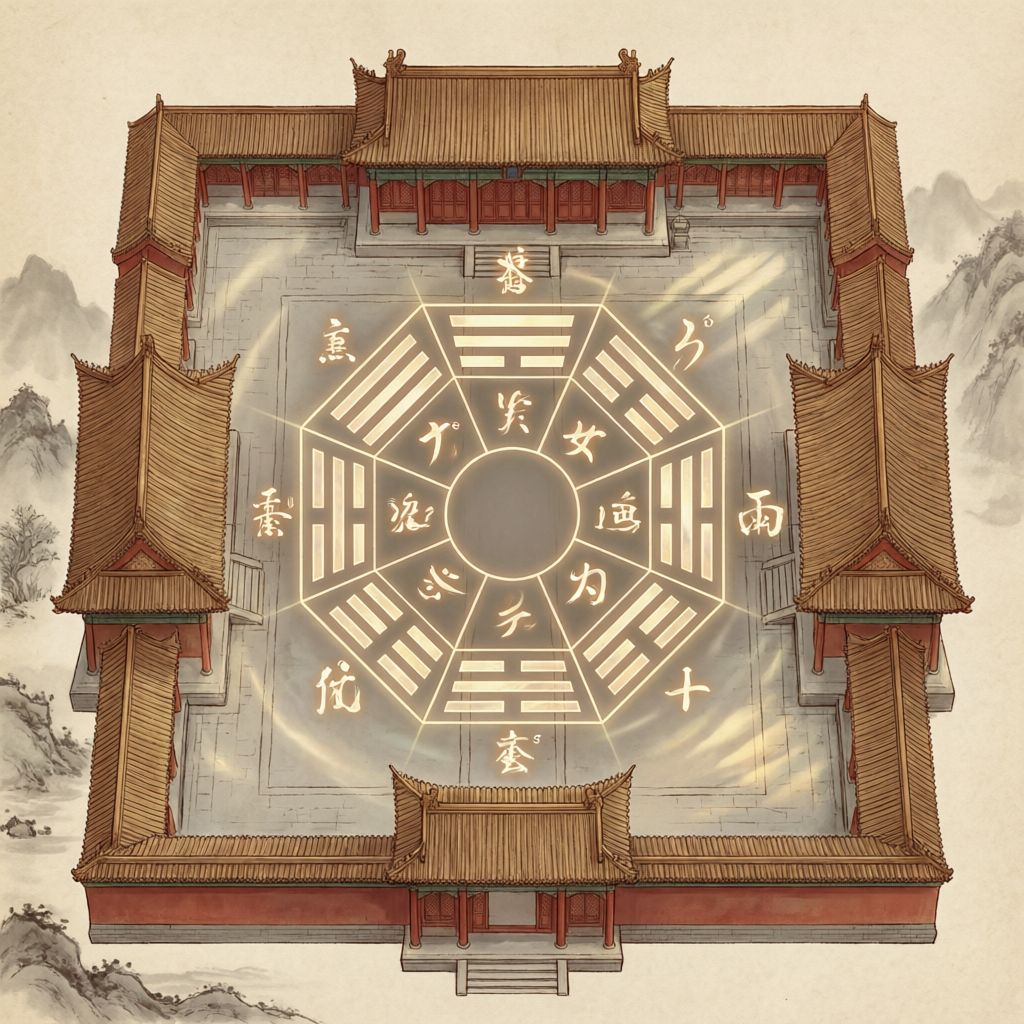
Spiritual and Symbolic Feng Shui Elements
Stupas aren’t just monuments—they’re energy anchors. Over 100 dot the complex, built on earth-metal-fire layers representing Buddhism’s Three Jewels.
Monks report sharper focus near stupas—no meditation needed. Not placebo. It’s environmental resonance.
Colors? White (metal) grounds the place. Red (fire) stirs spirituality. 70-30 ratio—balance in action. Even monk robes follow suit: red for passion, white hoods for focus. Fashion? No—feng shui strategy.
Modern Interpretations and Continued Influence
1.5 million visitors yearly. Does qi survive? Yes—because crowds move slow, quiet, reverent. Rules keep chaos out. Preservation isn’t about tourism—it’s energy maintenance.
Apply this to your space:
- Respect your land—build with nature, not against it
- Face south—boosts clarity
- Use color—white for focus, red for motivation
- Keep paths clear—no clutter
- Balance yin/yang—a plant (yin) + bright lamp (yang)
No palace? No problem. Just awareness.
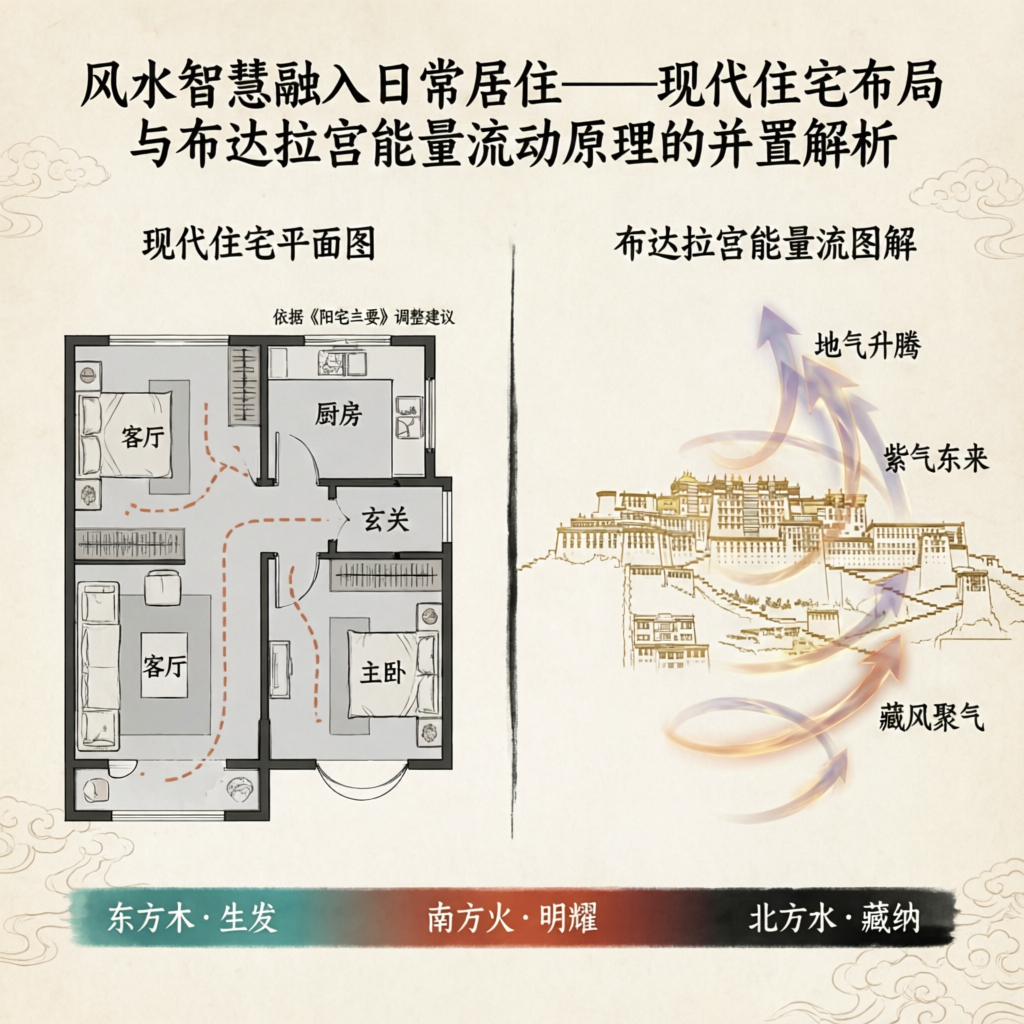
Myth-Busting: What People Get Wrong
- Built on a burial ground? No evidence. Foundation’s on bedrock.
- Cursed height? Elevation = clearer skies, stronger solar energy.
- Only Dalai Lama enters? Monks, scholars, officials all go in—roles, not mysticism.
- Red = bad luck? Red = fire = vitality. Used deliberately.
- Feng shui only for Chinese? Tibetan Buddhism developed similar principles independently. Shared wisdom, not cultural export.
What Actually Works
Forget hype:
- The palace works because it harmonizes nature + intention.
- Principles: alignment, balance, protection. Universal.
- You don’t need Tibet. Just observe, adapt, respect your space.
FAQ
Why analyze Potala for feng shui?
It combines landscape, architecture, and intent into a functional energy system. Every stair, wall, door? Purpose-built.
How does design reflect Buddhist cosmology?
Spiral ascent = enlightenment path. Colors = elements. Windows = portals for light/mind.
Apply to modern architecture?
Focus on alignment, circulation, elemental balance. Face your desk south. Add a plant.
Role of landscape?
Mountains = protective dragons. River = qi channel. Hill = energy bowl. Self-sustaining field for 300+ years.
[LINK: Feng Shui for Homes]
[LINK: Sacred Geometry in Architecture]
[LINK: Feng Shui and Buddhism]
Want harmony at home? Download “5 Feng Shui Fixes in 30 Minutes”—free guide to door placement, lighting hacks, and more.
Product Name: Feng Shui: Truths, Myths & Misconceptions
Cutting through the fluff—real cases, 4.3 stars, $0.00. Worth every scroll.
Product Name: Feng Shui: The Chinese Art of Placement
$6 starter guide. Simple, accurate, beginner-friendly.
Product Name: World Heritage Sites: A Complete Guide to 1,031 UNESCO World Heritage Sites
1,031 entries. Your global energy map in paperback.
Final thought: The Potala isn’t magic—it’s mastery. You don’t need Tibet. Start with your doorstep. Align your space. Breathe deeper.
Feng shui isn’t luck—it’s listening to where you stand.