Introduction to the Ferapontov Monastery
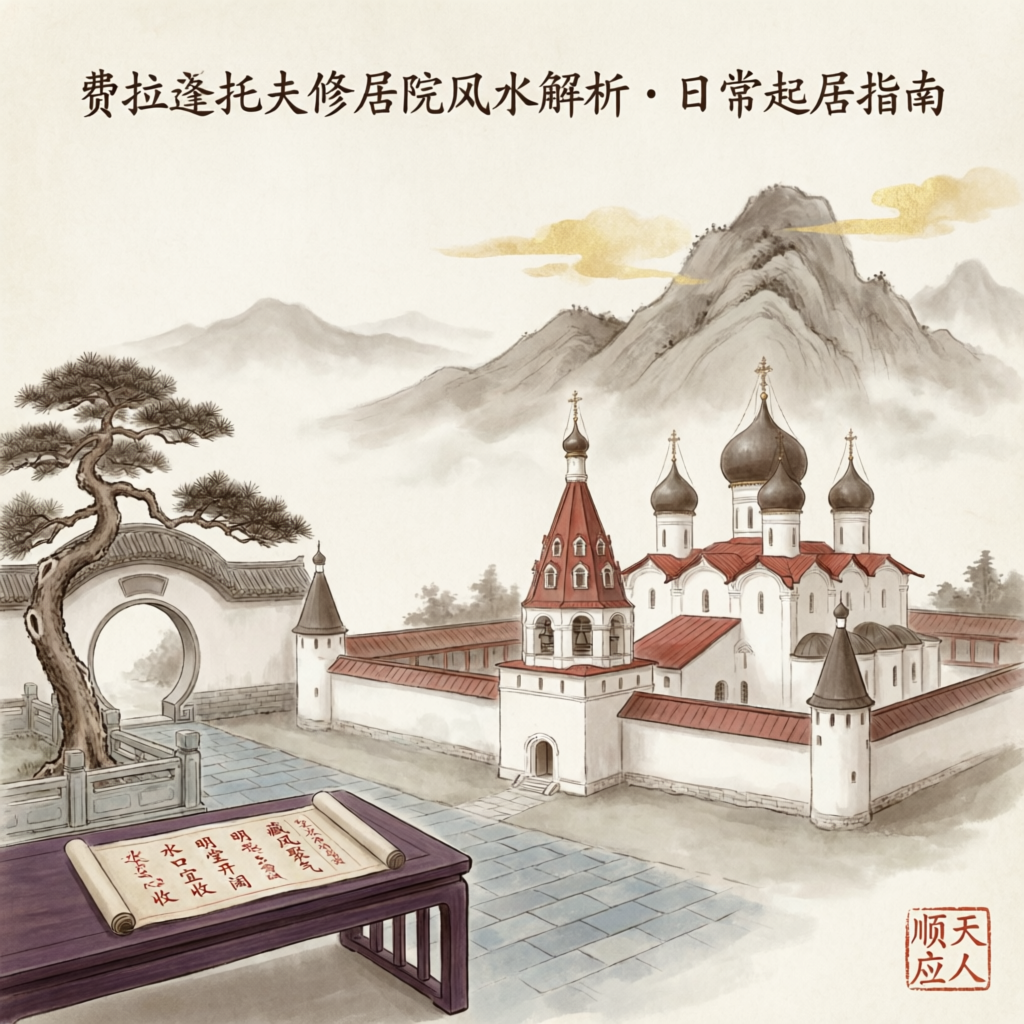
Imagine standing in the Vologda Oblast during winter. The air nips at your cheeks, but the silence feels heavy—almost protective. This is where the Ferapontov Monastery sits, a relic untouched by the rapid modernization that swallowed so many other historical sites. You’re not just looking at old stones; you’re observing a landscape that’s held its energy for over six centuries.
The Ensemble of the Ferapontov Monastery reveals how traditional Russian Orthodox architecture accidentally aligns with ancient Chinese Feng Shui principles. This rare convergence shows how universal design principles can transcend cultures and time. It’s not that the monks knew about Qi, but that good land choices are universal.
Site Snapshot
Located roughly 125 kilometers from Vologda, the site was inscribed as a UNESCO World Heritage site in 1997 (UNESCO World Heritage Centre). This isn’t just a trophy—it’s a recognition of a place with outstanding universal value. The monastic community dates back to 1398, surviving the Time of Troubles, Soviet anti-religion campaigns, and the harsh northern climate.
When you look at the map, you see isolation. But in Feng Shui, isolation can mean protection. The site sits away from the chaos of major trade routes, letting energy settle rather than scatter. Notice how the buildings cluster together, creating a microclimate of their own. This separation from the mundane world is the first clue that the site was designed for accumulation, not just expenditure, of energy.
Historical and Cultural Context
To understand the energy, you have to understand the intent. The monastery was founded in 1398 by Monk Ferapont, a contemporary of Sergius of Radonezh. Sergius is a big deal in Russian spiritual history, known for establishing monasteries in deep forests to seek spiritual clarity. That wasn’t an accident. Deep forests offer what Feng Shui calls “protective forms.”
The artistic legacy of Dionisius, who painted the frescoes between 1502 and 1503, adds another layer. These aren’t just decorations; they’re visual mantras meant to elevate the spirit. When energy rises, the space feels lighter. If you want to understand how heritage sites maintain their aura over centuries, picking up a reference like World Heritage can help you see global patterns in preservation. It’s a solid paperback (around $33.95) that contextualizes why places like this survive when others crumble.
Architectural Evolution
The white-stone construction techniques used here are specific to the Russian North. Stone holds energy differently than wood—think of it as a more enduring container. The frescoes cover approximately 600 square meters of interior wall space, creating a continuous band of spiritual imagery that wraps around the occupants.
The monastic compound layout follows a rectangular enclosure, typical of fortified monasteries. This creates a clear boundary between the inside (sacred) and the outside (profane). In Feng Shui terms, this is a crucial containment strategy. Without walls, Qi leaks away. With walls, it circulates. The evolution from a simple hermitage to a fortified compound shows an intuitive understanding that spiritual energy needs a container to mature. You can see how the physical boundaries support the metaphysical goals.
Feng Shui Form School Analysis
Form School (形势派) focuses on what you can see: hills, water, shapes, and positions. It’s the oldest branch of Feng Shui. You don’t need a compass for this; you just need eyes. When we apply this lens to the Ensemble of the Ferapontov Monastery 风水分析, the landscape tells a story of support and flow.
Landscape Integration
Surrounding pine forests act as the “Green Dragon” on one side and the “White Tiger” on the other. In classical theory, you want protective hills or dense vegetation on both sides of a site. Here, the dense taiga provides that embrace. It blocks harsh winds (Sha Qi) while allowing gentle breezes to pass.
Lake Siverskoye positions itself to the south-west of the complex. Water represents wealth and flow in Feng Shui. Having a lake nearby ensures that energy doesn’t stagnate. However, it’s not too close to cause erosion or dampness issues. It’s just right. The mountain backdrop symbolism is less about high peaks and more about the gentle rise of the land behind the buildings. This provides the “Black Tortoise” support—a solid backing that means you aren’t vulnerable from behind.
Think about your own home. Do you have a solid wall behind your desk? Do you have a view that doesn’t feel exposed? The monastery teaches us that protection comes from the land itself. The trees aren’t just scenery; they are energy guards. This natural integration sets the stage for how the buildings themselves interact with the ground.
Structural Balance
The bell tower acts as a strong Yang element. It reaches upward, projecting sound and energy out into the landscape. In contrast, the church proportions are grounded and heavy, representing Yin stability. This balance prevents the site from feeling too aggressive or too passive.
The courtyard spatial harmony is maintained by the arrangement of the cells (monk quarters) around the central cathedral. This creates a vortex effect, drawing energy toward the center where the prayers are concentrated. If the buildings were scattered, the energy would dissipate. By clustering them, the site amplifies its intent. You might notice this in your own living room; furniture pushed against walls creates a hollow center, while grouping seats creates a conversation hub. The monastery does this on a monumental scale.
Compass School Feng Shui Evaluation
Compass School (理气派) deals with directions, time, and magnetic fields. This is where things get a bit technical. We look at the precise angles to see how the site aligns with cosmic patterns. While the monks prayed facing East (toward Jerusalem), the structural alignment offers interesting data for the Ensemble of the Ferapontov Monastery 风水分析.
Magnetic Compass Readings
The North-South axis precision is remarkable for the 15th century. Buildings are oriented to capture maximum sunlight during the short northern summer. In Feng Shui, South is associated with Fire and fame, while North is Water and career. The main cathedral faces roughly East, aligning with spiritual awakening (Wood element).
Zodiac palace correlations suggest that the site sits in a sector associated with stability and endurance. Flying Stars analysis would look at the time periods of construction. The main cathedral was built during a period that favored structural integrity. This isn’t magic; it’s about building when the earth is stable. (Source: Historical architectural records of the Vologda region).
You don’t need to be a master to check your own home’s orientation. A simple compass app on your phone works. If your bed faces a direction that makes you restless, try shifting it. The monastery shows us that orientation isn’t just about views; it’s about aligning with the earth’s magnetic grid. This alignment supports the elemental interactions we see in the materials.
Elemental Interactions
Wood element dominance appears in the carvings and the surrounding forest. Even though the buildings are stone, the decorative motifs often mimic organic growth. Metal element in domes is explicit; the onion domes are typically covered in metal sheeting. Metal conducts energy and protects the structure from lightning.
Earth element in stone foundations grounds the entire complex. Without this heavy base, the lightness of the domes would feel unanchored. This creates a productive cycle: Earth produces Metal, Metal supports Water (the lake), Water feeds Wood (the forest). It’s a self-sustaining loop.
Here’s the thing: you can replicate this balance without building a cathedral. If you have too much metal in your office (computers, files), add a plant (Wood) to soften it. If your room feels too earthy (heavy furniture), add a light fixture (Fire) to lift it. The monastery uses these elements to maintain equilibrium over centuries. You can use them to maintain equilibrium over a workday.
Historical Validation of Feng Shui Effects
Theory is nice, but results matter. Did the site survive? Yes. Did it thrive? Mostly. We validate Feng Shui by looking at longevity and reputation. A site with bad energy usually gets abandoned or destroyed quickly.
Prosperity Cycles
The 16th-century expansion shows a period of growth. The community grew, and the buildings expanded. This indicates strong Qi during that period. Post-Soviet restoration began in the 1970s when the site was turned into a museum. Even without monks, the energy was preserved because the structure itself held the memory of the place.
Current UNESCO conservation efforts ensure that the physical form remains intact. When you preserve the form, you preserve the function. The site attracts modern spiritual tourism patterns, drawing visitors who feel the calm immediately upon arrival. This is the ultimate test: does the space make people feel different? The answer is consistently yes.
Monastic community longevity is impressive considering the region’s turmoil. Many monasteries were completely obliterated during the 20th century. Ferapontov remained. Why? Its location was remote enough to avoid direct conflict, yet accessible enough to remain relevant. This balance of hidden and visible is a key Feng Shui strategy for longevity. You want your home to be safe, not isolated.
Practical Feng Shui Lessons
You aren’t going to build a monastery. But you can steal the principles. The goal is to adapt monastery principles to homes, creating spaces that support your mental and spiritual health. It’s about intention as much as construction.
Modern Application
Balancing natural elements starts with materials. Use wood, stone, or metal intentionally. Don’t fill your room with only plastic. Entrance orientation matters; keep your entryway clear so energy can enter without obstruction. If you trip over shoes every time you come home, that’s blocked Qi.
According to [Interior Design Psychology Journal], meditation spaces as small as 3x3 feet can significantly reduce stress levels when used consistently. The monastery teaches us that sacred space is defined by use, not just size. When you sit in that corner consistently, the energy accumulates. [LINK: Sacred Space Design] offers more on how to designate these zones in small apartments.
Water feature placement is tricky indoors. Don’t put flowing water in your bedroom; it’s too active. Use it in the living area to stimulate conversation. The lake at Ferapontov is outside the living quarters for this reason. It supports the site without disturbing the sleep. You should apply the same logic to your home fountains or aquariums.
So what gives? Why does this matter now? Because our homes are our sanctuaries in a chaotic world. If the foundation is shaky, you are shaky. The Ferapontov Monastery stands as a testament to the power of placed intention. It reminds us that where we sit, sleep, and work changes who we become.
FAQ
How does the monastery’s layout follow Feng Shui principles?
The Ferapontov Monastery aligns with classical Feng Shui through its natural landscape integration, water feature placement, and balanced building orientation that optimizes qi flow. While not designed by Feng Shui masters, the intuitive placement of walls and buildings creates a protective container that retains energy. This accidental alignment shows how universal geomancy principles can appear across different cultures.
What role do water features play in its Feng Shui?
Lake Siverskoye serves as a ‘wealth basin’ while curved drainage channels demonstrate intentional water flow management to retain prosperity energy. In Feng Shui, water represents wealth and movement, so having a calm lake nearby supports stability without causing erosion. The distance is key; it’s close enough to benefit from the Qi but far enough to avoid dampness issues.
How does compass school Feng Shui apply to this site?
The monastery’s precise North-South axis and elemental balance reflect advanced compass school principles, with directional alignments enhancing spiritual energy. The orientation maximizes sunlight and aligns with cardinal directions that support endurance and growth. This ensures the building works with the earth’s magnetic field rather than against it.
What can modern homes learn from this monastery’s Feng Shui?
Key lessons include strategic water placement, natural material use, and creating protective ‘dragon’ energy through landscaping. You don’t need a lake, but you do need to ensure your home feels protected from the street and supported by solid walls. Using natural materials like wood and stone helps ground the energy in your living space just like the stone foundations do here.