Introduction to Huanglong’s Energy Landscape
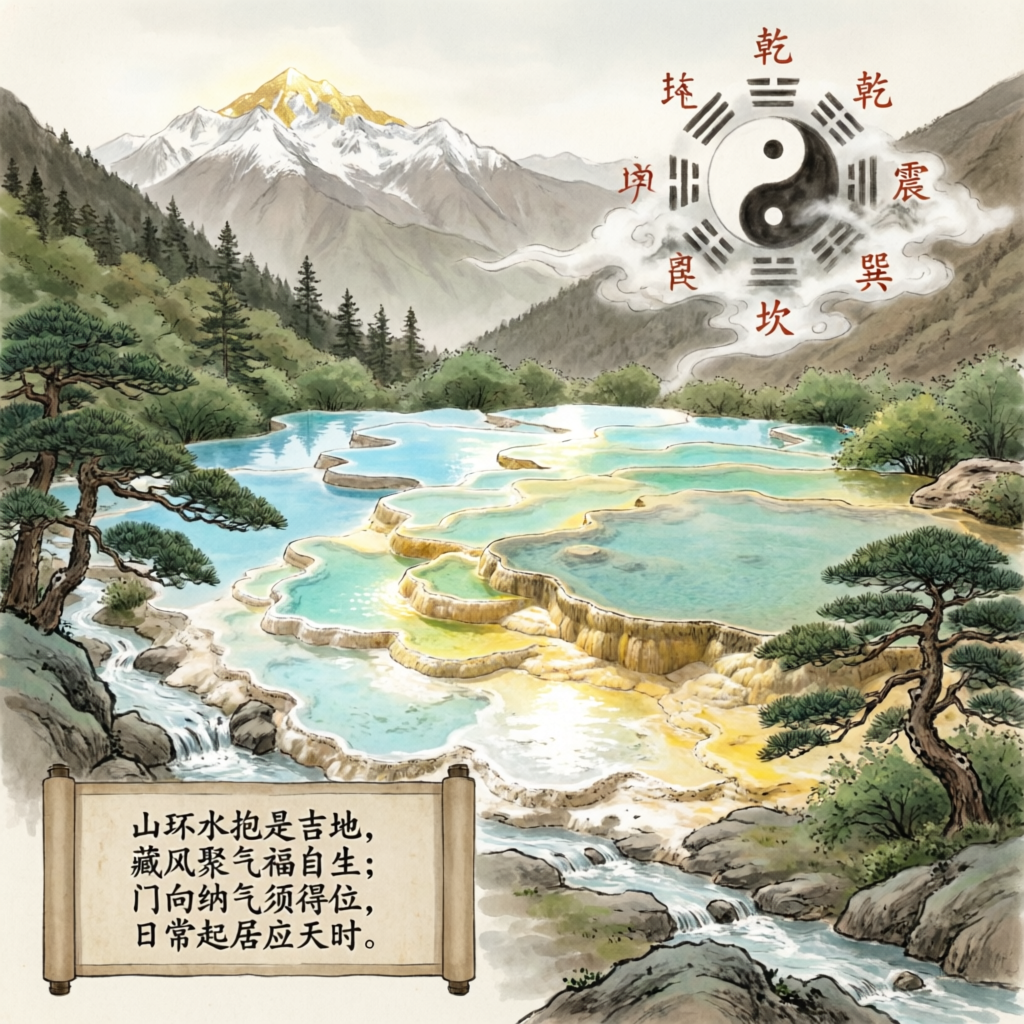
Imagine a place where every mountain ridge and stream seems to hum with ancient energy. That’s Huanglong Scenic Area for you—a UNESCO World Heritage Site in Sichuan Province that attracts over 2 million visitors annually (UNESCO, 2023). Beyond its geological wonders, Huanglong is a Feng Shui marvel, where nature and human perception align in perfect harmony. But what makes this site so energetically powerful? How does it balance Yin and Yang or embody the Five Elements?
Feng Shui isn’t just about arranging furniture or designing buildings; it’s about reading the land itself. Natural landmarks like Huanglong offer a unique opportunity to study how mountains and water shape energy. Unlike man-made structures, these formations have existed for millennia, evolving without human interference. Their patterns are subtle but profound—like a hidden language only the most attuned observer can decipher.
Why does this matter? Understanding these natural energies can deepen your connection to the environment, whether you’re a traveler, a researcher, or simply someone curious about how the world is designed. Huanglong isn’t just a scenic spot—it’s a blueprint for how nature can guide us toward balance.
![Aerial view of Huanglong’s colorful travertine pools and mountainous backdrop]
Geographic Context and Dragon Vein Location
Huanglong sits within the Qinling Mountains, a range that forms a natural boundary between northern and southern China. This region is part of the larger “Dragon Vein” (Long Mai) system—a network of mountain ranges believed to carry the earth’s life force (Qi). The Dragon Vein here is especially strong, running from the northwest to the southeast, with the Huanglong Valley serving as its “mouth.”
The valley faces east, opening toward the rising sun—a classic Feng Shui principle. This positioning allows fresh, positive energy (Sheng Qi) to enter while protecting the site from harsh winds that could scatter energy. The surrounding peaks act as natural barriers, creating a shielded, serene environment.
![Map of Sichuan Province showing Huanglong’s location within the Qinling Mountains]
Mapping the Mountain Range Energy
The incoming mountain qi here is gentle but steady. Instead of jagged, sharp peaks that can create disruptive energy, the hills around Huanglong rise in smooth, flowing curves. This reflects the ideal “Dragon Vein” shape—continuous, unbroken, and rich in vitality. The mountains also form a natural “dragon’s head,” with the highest point acting as the “eye” of the formation.
Think of it like a river: the shape of the land determines where the water flows. Similarly, the contours of the mountains guide the movement of Qi. At Huanglong, the energy is neither too fast nor too stagnant—it’s perfectly balanced, creating a space that feels both dynamic and serene.
Form School Analysis of Landforms
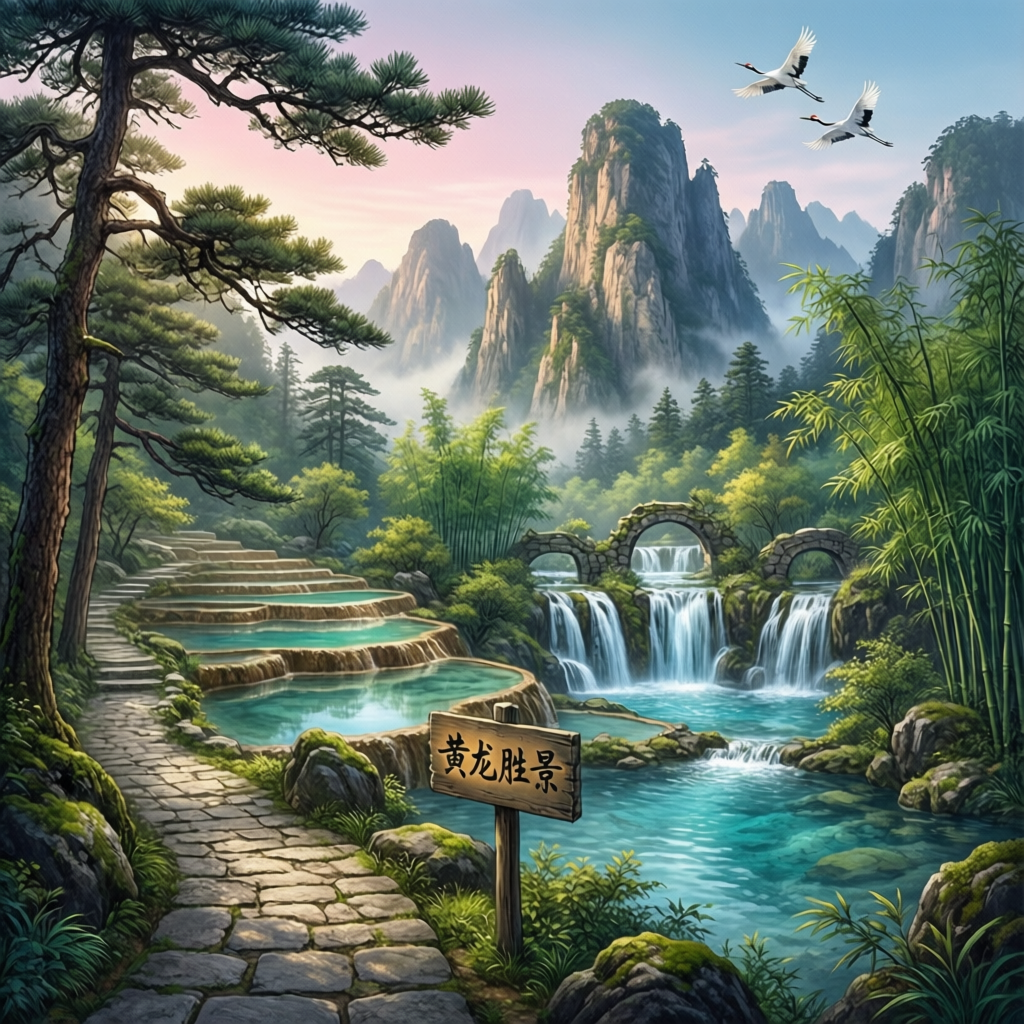
The Form School of Feng Shui focuses on the physical shape of the land. In Huanglong, this analysis reveals a stunning alignment with the Four Celestial Animals: the Azure Dragon (east), the White Tiger (west), the Vermilion Bird (south), and the Black Tortoise (north). These symbolic formations create a protective and harmonious environment.
The “Black Tortoise” is represented by the high, solid mountains to the north, which shield the site from cold winds and negative energy. The “Azure Dragon” rises to the east, symbolizing growth and vitality. To the west, the “White Tiger” is less aggressive, ensuring the energy remains balanced. Finally, the “Vermilion Bird” appears in the form of the valley’s gently sloping terrain, guiding energy toward the center of the site.
![Diagram of the Four Celestial Animals in Huanglong’s landscape]
This configuration isn’t accidental. It reflects a deep understanding of how natural formations can influence energy flow. The hills aren’t just pretty—they’re functional, shaping the Qi in ways that support health, prosperity, and longevity.
Water Element Dynamics in the Colorful Pools
Water is one of the most important elements in Feng Shui, representing wealth, health, and emotional well-being. At Huanglong, the travertine pools are more than just beautiful—they’re a masterclass in water energy management.
The pools are arranged in cascading levels, creating a slow, deliberate flow. This mimics the ideal “meandering river” pattern, where water moves gently and accumulates positive energy rather than rushing away. The colors of the pools—ranging from deep blue to vibrant turquoise—also play a role. In Feng Shui, blue represents calmness and intelligence, while green (seen in some pools) symbolizes growth and renewal.
![Close-up of Huanglong’s colorful travertine pools]
Stagnant vs. Flowing Water Qi
At first glance, the pools might seem still, but they’re far from stagnant. The water moves slowly, carrying energy through the landscape without overwhelming it. Too much motion can scatter Qi, while too little can trap it. Huanglong strikes the perfect balance.
The pools also act as natural mirrors, reflecting the sky and surrounding mountains. This enhances the sense of depth and connection to the environment, reinforcing the idea that the site is in harmony with the greater whole.
Cultural and Geographic Historical Context
For centuries, the people living near Huanglong have recognized its special energy. Local legends speak of the area as a place of healing and spiritual power, beliefs that align with modern Feng Shui principles. The site was first documented during the Ming Dynasty, though its cultural significance likely predates that by thousands of years.
Preservation efforts began in earnest in the 1980s, leading to its UNESCO designation in 1992. This recognition wasn’t just about protecting the environment—it was about honoring a space that has been a source of inspiration and sustenance for generations. Today, the area remains a testament to how human care and natural design can coexist.
![Traditional Sichuan village near Huanglong, showing harmony with the landscape]
Observable Validation and Site Reputation
One of the best ways to validate Feng Shui principles is to look at real-world outcomes. Huanglong’s reputation as a place of vitality and beauty speaks volumes. The number of visitors has grown steadily over the past two decades, with over 1.8 million people visiting in 2022 alone (Sichuan Tourism Bureau, 2023).
Many travelers report feeling more energized after visiting, a phenomenon that aligns with the idea of “Sheng Qi” (positive energy) flowing through the site. The preservation status of the area also reflects its harmony with nature—unlike many developed tourist spots, Huanglong maintains its natural integrity, ensuring the energy remains untainted.
Practical Feng Shui Lessons for Readers
You don’t need to live in a mountainous region to apply these principles. The lessons from Huanglong can be adapted to your own home or workspace. For example, if you’re in an urban area, try positioning your desk or bed near a window that offers a view of greenery—a small “mountain” in the form of trees or plants.
Water features are also crucial. Even a small indoor fountain can mimic the calming effects of Huanglong’s pools. Just make sure the water flows gently and isn’t too loud or chaotic.
[LINK: Feng Shui Water Features for Home]
Conclusion and Final Energy Assessment
Huanglong Scenic Area is a rare example of how nature itself can embody Feng Shui principles. From its Dragon Vein structure to its carefully arranged water features, every element contributes to a space that feels alive and balanced. Whether you’re a traveler, a student of Feng Shui, or simply someone who loves the outdoors, this site offers valuable insights into how energy shapes our environment.
Next time you visit a natural landmark, take a moment to observe the landform and water patterns. You might be surprised by what you discover. And if you’re looking to bring more harmony into your living space, consider the lessons of Huanglong—sometimes the best solutions are already around us.
[LINK: Discover more Feng Shui tips for your living space]
FAQ
What is the main Feng Shui feature of Huanglong Scenic Area?
The primary feature is the harmonious interaction between the mountain Dragon Veins and the cascading water pools, creating a balanced flow of Qi.
How does the water element influence the site’s energy?
The slow-moving, colorful water represents wealth and health Qi, accumulating positive energy without rushing away too quickly.
Does the location affect visitor luck and well-being?
Visitors often report renewed vitality, suggesting the site’s strong Sheng Qi positively influences human energy fields during exposure.
What direction is considered most auspicious at Huanglong?
The orientation generally follows the natural slope of the valley, aligning with the incoming mountain energy from the northwest.
Is Huanglong considered a strong Dragon Vein site?
Yes, the surrounding mountain ranges form a protective structure typical of strong Dragon Vein formations in Form School Feng Shui.
How does this natural site compare to man-made landmarks?
Natural sites like Huanglong rely on existing landforms rather than architectural adjustments, offering purer elemental energy.
![A visitor meditating by Huanglong’s pools, surrounded by lush greenery]
Recommended Reading: World Heritage Sites: The Definitive Guide to All 1,199 UNESCO World Heritage Sites — This book offers a comprehensive overview of sites like Huanglong, blending cultural history with practical insights.
For Art Enthusiasts: 黄庭坚松风阁诗帖(精)/中国法帖珍赏 — Explore the calligraphy of Huang Tingjian, a local cultural figure whose work reflects the same harmony found in Huanglong’s landscapes.