Introduction to Lijiang Ancient Town
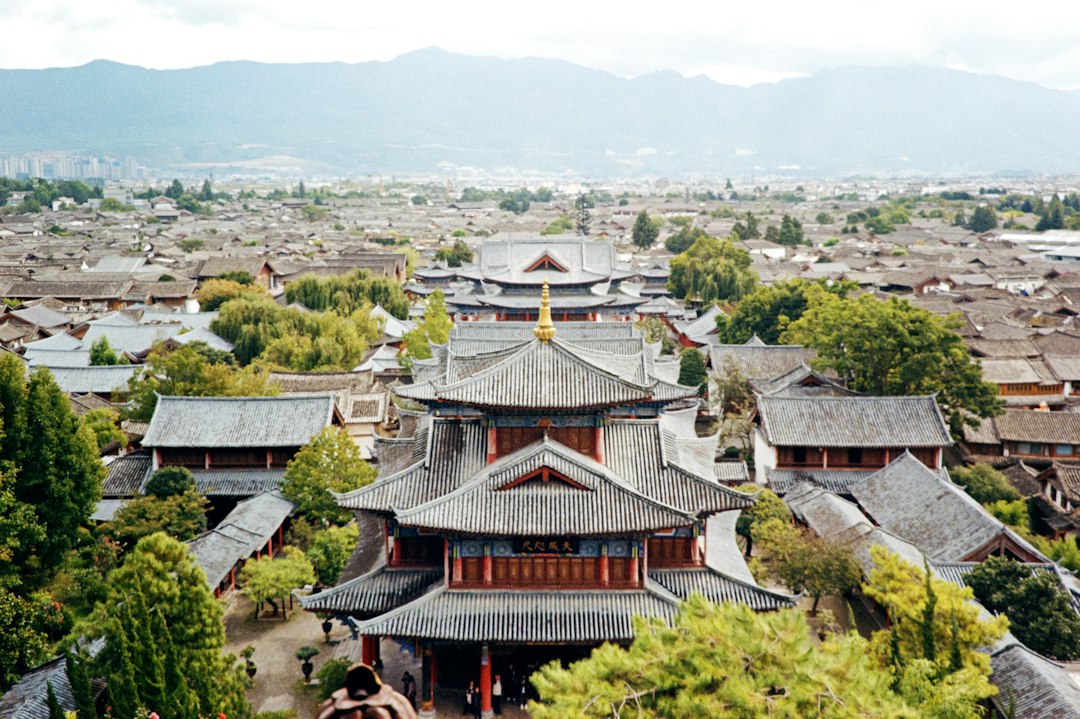 Photo by Kyle Yen on Unsplash
Ever wonder why Lijiang Ancient Town still feels alive after 800 years? Its water system defies standard feng shui rules—literally flowing north instead of south, looping through homes before joining the main river. It’s not magic; it’s engineering. The Naxi people turned a trade hub into a living organism by designing a water network that’s still functional today. (Fun fact: the canals are still used for irrigation.)
Designated a UNESCO World Heritage Site in 1997, Lijiang sits in a valley where the peaks aren’t just scenery—they’re part of the blueprint. The Naxi folks knew survival meant working with the land, not against it. Walk the cobblestone streets, and you’re tracing the veins of a dragon. Most tourists see pretty canals. You should see the energy map.
 Aerial view of Lijiang Ancient Town showing winding waterways through traditional tiled roofs
Lijiang’s longevity isn’t luck. It survived dynastic collapses, earthquakes, and modernization that wiped out similar settlements. Understanding the 丽江古城风水分析 (Lijiang Ancient Town Feng Shui Analysis) reveals why. It’s not about mystic charms—it’s about water retention, wind protection, and spatial orientation that maximizes solar gain while minimizing harsh northern blasts. You don’t need to live in Yunnan to apply these principles, but you do need to understand how the original architects thought.
This analysis breaks down the specific geomantic choices that kept Lijiang prosperous for centuries. You’ll see how form dictates function. By the end, you’ll know exactly what to look for when assessing your own property’s relationship with its surroundings.
Feng Shui Fundamentals in Lijiang’s Layout
Feng shui splits into two main schools: Form School (形势派) and Compass School (理气派). Lijiang leans heavily on Form School principles, which prioritize physical landforms over abstract calculations. The Compass School deals with directions and timing, but if the physical form is broken, no amount of directional adjustment fixes it. Lijiang’s builders knew this. They secured the physical foundation first.
Directional Context and Orientation
The town doesn’t sit squarely on a north-south axis like a modern grid. It angles slightly to catch the morning sun while shielding against the winter wind. This isn’t random—it aligns with the valley’s natural sweep. The main entrance faces southeast, welcoming gentle breezes while the northern edge blocks cold.
Golden section proportions appear in the spacing between major buildings. It’s not just aesthetic. Proper spacing allows qi to circulate without stagnating. Too tight, and energy chokes. Too loose, and it dissipates. Lijiang strikes a balance where courtyards feel enclosed but not cramped. You can test this in your own home by checking if rooms feel breathable. If you’re holding your breath in a hallway, the proportions are off. (Pro tip: measure your space with a tape measure, not just your gut.)
 Diagram showing Lijiang Ancient Town orientation relative to Jade Dragon Snow Mountain and wind patterns
For those wanting to dive deeper into how heritage sites utilize these ratios, there are reference materials available that break down the geometry of sacred spaces. Amazon.com : World Heritage offers a solid collection of texts that contextualize these architectural decisions within global heritage standards. It helps to see how other cultures solved similar problems.
The key takeaway here is alignment. Your property doesn’t need to match Lijiang’s exact degrees, but it should respect the local topography. Ignoring the land’s natural slope to force a cardinal direction usually creates more problems than it solves. Next, we’ll look at the specific features that animate this layout.
Key Feng Shui Features Analysis
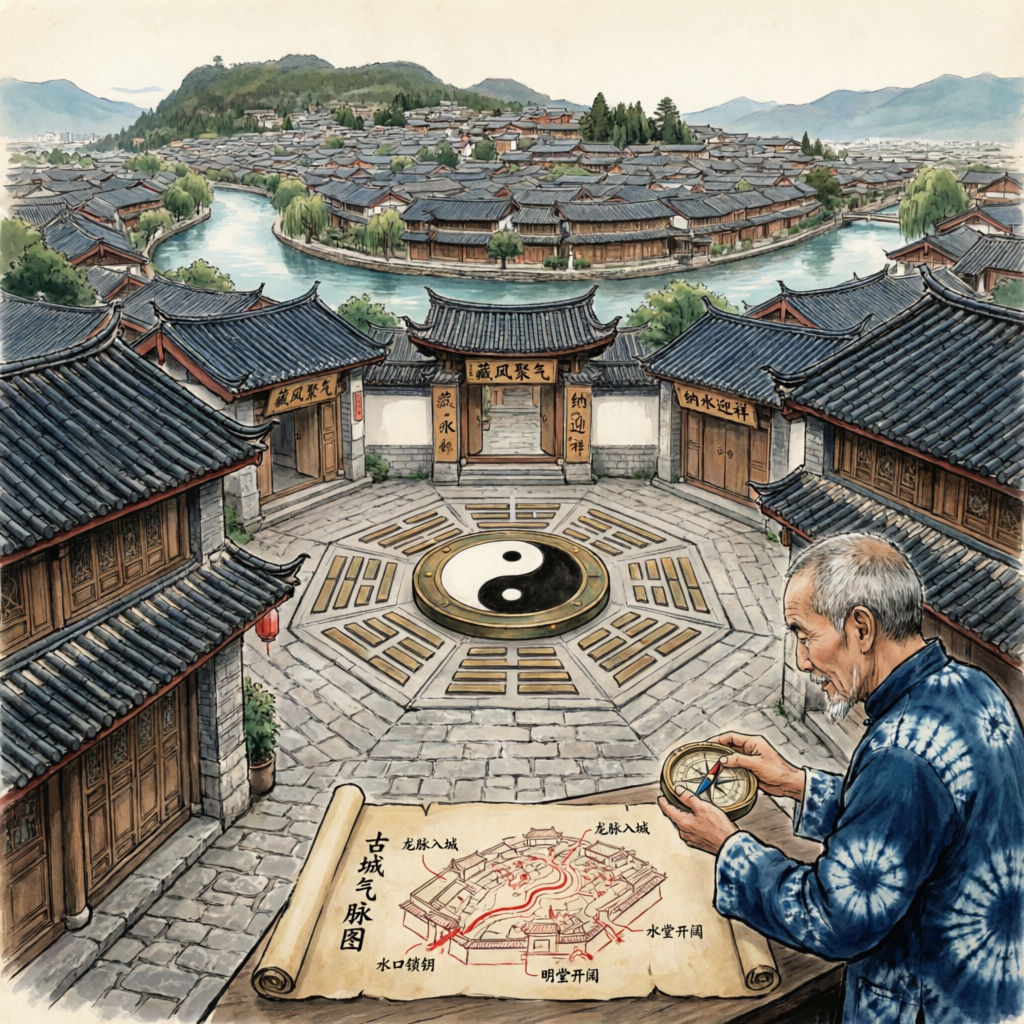
Water and mountains are the binary code of feng shui. One moves, one stays. In Lijiang, both are manipulated with surgical precision. The water system acts as the energy conduit, while the mountain provides the structural backbone. You can’t have one without the other in this framework.
Black Dragon Pool Water System
The Black Dragon Pool isn’t just a scenic spot—it’s the source node for the town’s hydraulic network. Water emerges from underground springs here before splitting into three main channels that weave through residential zones. This sinuous path slows the flow. Fast water kills qi; slow water nourishes it.
The engineering specifics are notable. The channels are shallow enough to interact with daily life but deep enough to maintain consistent flow during dry seasons. Reflections in the water double the visual space, creating an energy balance that feels larger than the physical footprint. This trick works in small yards too. A properly placed water feature can expand the perceived energy field of a property.
 Close-up of Black Dragon Pool with traditional pavilion reflections in Lijiang Ancient Town
When conducting a 丽江古城风水分析, researchers note that the water exits the town in a controlled manner, symbolizing wealth retention rather than loss. In many modern homes, drains sit directly opposite the front door. That’s a leak. Lijiang ensures the water meanders before leaving, keeping the energy engaged with the residents longer. You should check where your water leaves your property. If it rushes straight out, you’re losing potential stability.
Jade Dragon Snow Mountain Alignment
To the north lies the Jade Dragon Snow Mountain. In Form School theory, this is the “Black Turtle” position—the protective backing every site needs. It rises over 5,500 meters, creating a massive barrier against cold northern winds. This isn’t just symbolism; it’s meteorology.
The visual dominance metrics are staggering. The mountain occupies a significant portion of the northern skyline, creating a psychological sense of support. Residents feel backed up, not exposed. Solar angle considerations also come into play. The mountain doesn’t block the winter sun but shields the harsh wind. It’s a filter. (Pro tip: if you don’t have a 5,000-meter peak, use a tall hedge or fence to mimic this effect.)
 Jade Dragon Snow Mountain view over tiled roofs in Lijiang Ancient Town
If you don’t have a 5,000-meter peak behind your house, you create micro-mountains. Tall hedges, solid fences, or neighboring buildings can serve this function. The goal is to create a sense of enclosure at the rear. Without it, you’re energetically exposed. Here’s the thing: most suburban homes have a garage at the back or a weak fence. That’s a vulnerability. Strengthening the rear boundary is often the highest-impact fix you can make.
The interaction between the water and the mountain creates a closed loop. Energy comes from the mountain, settles in the town via the water, and rests. This cycle sustains the community. Moving forward, we need to verify if this theory holds up against historical reality.
Historical Validation of Feng Shui Principles
Theory is cheap. Results matter. Lijiang’s prosperity wasn’t a brief flash. It lasted through the Ming and Qing dynasties, surviving political upheavals that destroyed less resilient towns. The population remained stable, and the infrastructure held. According to UNESCO documentation, the town has maintained its urban fabric for over eight centuries without major reconstruction (UNESCO World Heritage Centre). That’s rare.
Resilience through dynastic changes proves the layout wasn’t dependent on a specific ruler’s favor. It worked for merchants, farmers, and officials alike. The water system kept fires in check—a major risk in wooden structures—and provided irrigation for surrounding fields. Economic prosperity followed the energy flow. When the water flowed, trade flourished.
 Historical illustration of Qing Dynasty trade activity in Lijiang Ancient Town
Modern tourism sustainability adds another layer. Despite millions of visitors annually, the core energy structure remains intact. Some areas feel commercialized, but the main residential zones still operate on the original grid. This suggests the underlying feng shui is robust enough to handle high traffic without collapsing. Other sites crumble under similar pressure. Lijiang absorbs it.
For a deeper dive into how world heritage sites maintain integrity under pressure, you might find 1-16 of over 1,000 results for “World Heritage” useful as a starting point for research materials. It shows the breadth of documentation available on preserved sites. Understanding the historical trajectory helps validate the geomantic choices.
The lesson here is endurance. A good feng shui setup doesn’t just make you feel good for a month. It supports generations. If your space feels fragile or constantly in need of repair, the foundation might be wrong. Next, we’ll translate these massive scale principles into actions you can take today.
Modern Feng Shui Lessons from Lijiang
You can’t move a mountain into your backyard. You can’t dig a canal through your living room. But you can replicate the function of these features. The goal isn’t imitation; it’s adaptation. Lijiang teaches us about flow, protection, and proportion.
Water feature integration techniques start with movement. Stagnant water breeds mosquitoes and bad qi. Moving water, even via a small pump, keeps energy active. Place water features in the southeast or east sectors of your home for growth energy. Avoid the bedroom. The sound of flowing water disrupts sleep, which contradicts the restorative purpose of that room.
Micro-mountain landscaping uses plants and structures to create boundaries. A tall bookshelf against a weak wall acts as a mountain. A solid headboard behind your bed provides the “Black Turtle” support you need for rest. Directional awareness in urban living means checking what faces your windows. If a sharp corner points at you, it’s a “poison arrow.” Use curtains or plants to soften it.
 Modern home interior with small indoor water feature in corner for feng shui energy activation
When applying 丽江古城风水分析 principles to modern apartments, focus on the entrance. Lijiang’s entrances were designed to gather qi. Your entryway should be clear, well-lit, and welcoming. Clutter here blocks energy before it enters the rest of the home. Clear the shoes. Fix the bulb. Make the path open.
Another resource for understanding how these principles translate to modern design is Results, which aggregates various design and heritage guides. It helps to see multiple examples of adaptation. You aren’t limited to one style.
The final piece is maintenance. Lijiang survived because the waterways were cleaned regularly. Your space needs the same care. Dust is stagnant energy. Fix leaks immediately. A dripping faucet is wealth leaking away, literally and metaphorically. Keep the systems running.
FAQ
Why is Lijiang Ancient Town considered a Feng Shui masterpiece?
It’s a masterclass in balancing mountain and water dynamics. The Jade Dragon Snow Mountain provides protective backing while the waterways circulate energy without stagnating. The directional alignments maximize solar gain and minimize wind exposure, creating a self-sustaining environment. Most sites get one right; Lijiang got both.
How do the waterways influence the town’s energy flow?
The sinuous channels distribute positive chi throughout the town while maintaining practical irrigation functions. By slowing the water down, the design ensures energy settles in the residential zones rather than rushing away. This mimics the natural meandering of rivers in auspicious landscapes.
What role do surrounding mountains play in Feng Shui?
The Jade Dragon Snow Mountain acts as a “dragon gate,” providing protective support and directional reference. It blocks harsh northern winds and creates a psychological sense of stability for residents. In modern terms, it’s about having a solid backing behind your property.
Can modern cities replicate Lijiang’s Feng Shui success?
While exact replication isn’t possible, key principles like water integration and directional awareness remain applicable. You can’t build a mountain, but you can use landscaping to create protection. The core logic of balancing flow and stability works anywhere.
Quick-Reference Checklist
- Check Your Water Flow: Ensure water features move but don’t rush. Fix leaks immediately.
- Secure the Back: Verify you have solid support (wall, fence, building) behind your main seating or bed.
- Clear the Entrance: Remove clutter from the entryway to allow energy to gather.
- Orient for Light: Maximize morning sun exposure while shielding against harsh afternoon heat or wind.
- Maintain Boundaries: Keep fences and hedges intact to define your energy field clearly.