Uncover the Hidden Energy of Suzhou’s Gardens
Did you know that walking through Suzhou’s gardens can actually calm your mind? It’s not just about pretty scenery—it’s about how these spaces were designed to shape energy. Take the Humble Administrator’s Garden: you might feel a sudden wave of peace near the water without knowing why. That’s no accident. It’s the result of centuries of clever spatial engineering.
This guide will show you how to do a 苏州古典园林风水分析 (Feng Shui analysis of Suzhou classical gardens) on your own. You don’t need to be an architect to see the patterns. Just learn where to look. By the end, you’ll understand how water, stone, and plants work together to guide Qi (life force). You’ll start spotting these principles in your own home or local park.
What You’ll Achieve: Reading the Energy Map
Most people see a garden as decoration. You’re going to learn to see it as a machine for living. When you master this perspective, static spaces begin to feel dynamic. You’ll understand why a path curves instead of running straight. You’ll see why a pavilion faces southeast rather than north.
This skill transfers directly to modern interiors. A cluttered hallway blocks energy just like a blocked canal does in Suzhou. We’re focusing on historical sites because they offer the clearest examples of these rules in action. Once you see them here, you’ll notice them everywhere.
Prerequisites: Tools and Context
Before you start analyzing, you need a baseline understanding of the environment. Suzhou sits in a subtropical zone with high humidity and distinct seasons. This climate shaped every design choice. Builders used local Taihu stones because they were porous and weathered well in the rain. (Fun fact: they’re not just pretty rocks.)
You should also grasp the difference between Form School and Compass School Feng Shui. Form School looks at shapes and landscapes (hills, rivers). Compass School uses directions and degrees. Suzhou gardens rely heavily on Form School principles—they mimic natural landscapes in miniature.
A good reference book is your best friend here. I keep a copy of World Heritage nearby when studying these sites. It costs around $33.95 and breaks down the criteria for why certain sites gain protection. Having that context prevents you from mistaking random decoration for intentional design.
You don’t need a compass to start. Your eyes are enough. But you do need to slow down. Rushing through a space misses the subtle shifts in energy.
Step-by-Step Analysis of Garden Energy
Step 1: Assess the Water-Land Interface
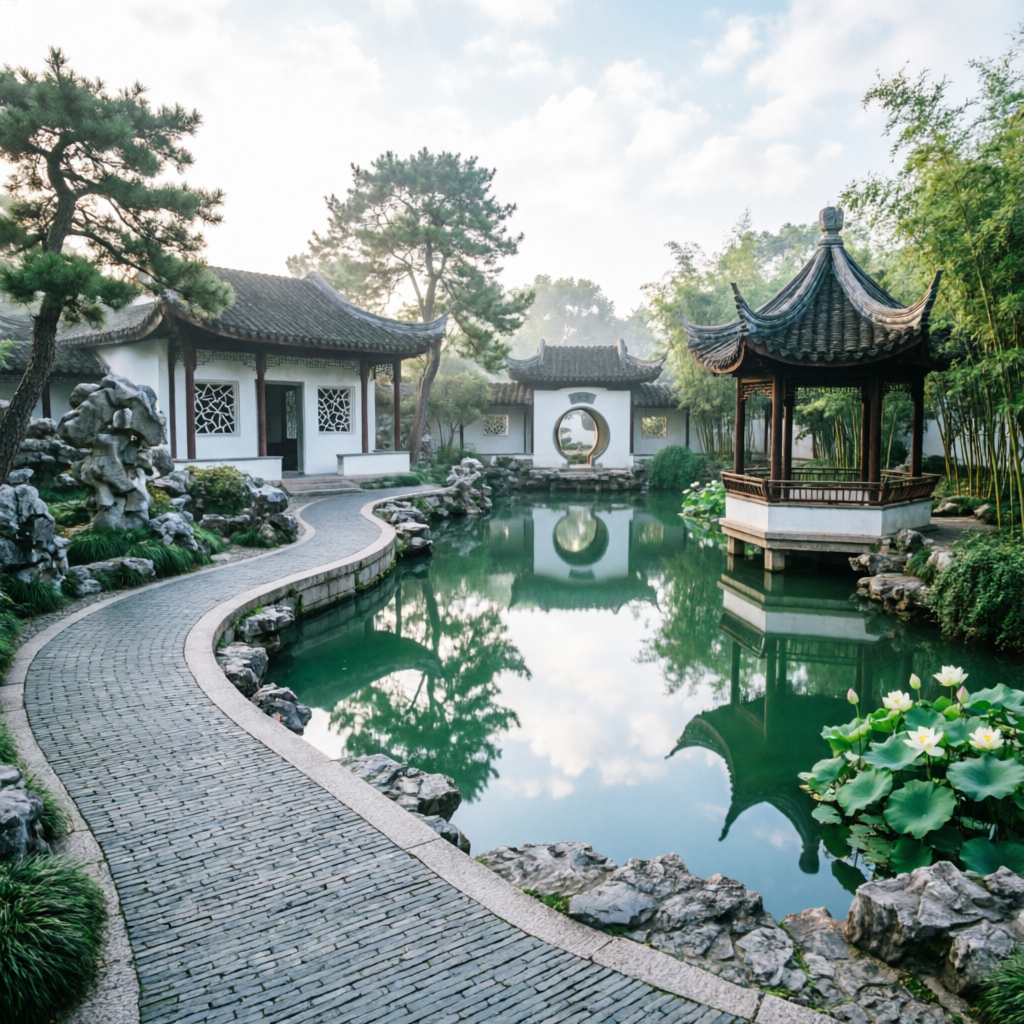
Water is the blood of the garden. In Feng Shui, water represents wealth and flow. If you look at the central ponds in Suzhou, you’ll notice they never have sharp, geometric corners. They curve.
Sharp corners create “Poison Arrows” of energy that move too fast. Curved edges slow the Qi down, allowing it to settle. This is crucial for a 苏州古典园林风水分析 because water placement dictates the mood of the entire site. Reflective surfaces amplify light, bringing Yang energy into shaded areas.
Historical records indicate that over 100 classical gardens existed in Suzhou during the Ming and Qing dynasties. Most shared this water-centric layout. The water isn’t just for looks—it cools the air in summer and holds heat in winter.
Step 2: Trace the Pathway Flow
Walk the paths. Are they straight? Almost certainly not. Winding corridors force you to change pace. This mechanical slowing down aligns your internal rhythm with the garden.
Straight lines rush energy out of a space. Curves retain it. You can test this in your own home. A long, straight hallway feels like a tunnel. Add a rug or a plant to break the line, and the feeling changes. In Suzhou, moon gates act as filters. They frame the view and limit how much energy passes through at once.
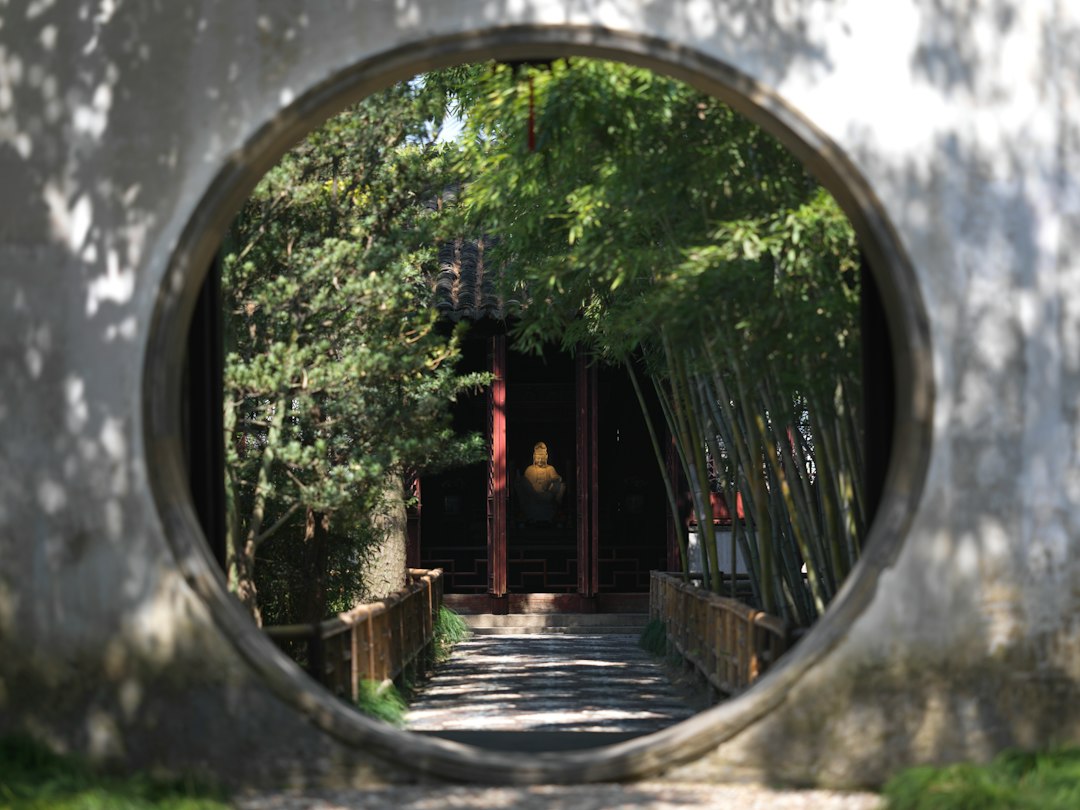 Photo by Tianhao Zhang on Unsplash
Here’s the thing: many modern renovations miss this. They widen paths for accessibility but lose the energy retention. You need to balance flow with containment.
Step 3: Check Architectural Orientation
Pavilions aren’t placed randomly. They face specific views to capture beneficial Qi. Often, they face the water but sit backed by rockeries or walls. This creates the “Armchair Configuration” in Feng Shui. You want support behind you and opportunity in front of you.
When you sit in a Suzhou pavilion, notice what’s at your back. It’s usually a wall or dense planting. This provides psychological security. It allows you to relax fully. If you’re designing a patio, try to replicate this support. Avoid that setup—it’s like inviting chaos.
Step 4: Evaluate Botanical Symbolism
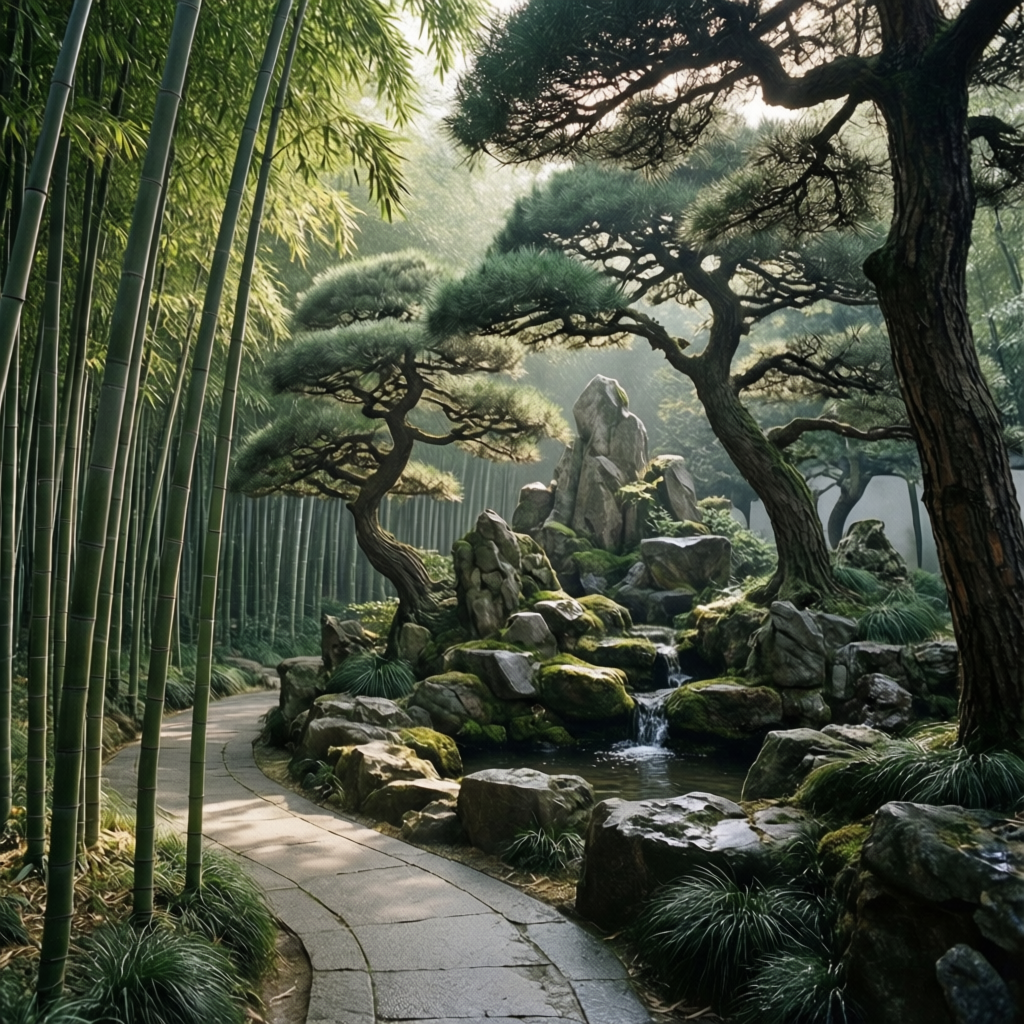
Plants are not just green fill. They’re elemental anchors. Bamboo grows in the east to capture morning wood energy. Pine trees often sit in the north for winter resilience.
Pruning matters too. Overgrown branches block light and stagnate air. Gardeners in Suzhou maintained canopy shapes to let light filter through. This isn’t just aesthetics—it’s about ensuring Yang energy reaches the ground. If you have a dark corner in your yard, trim the overhead leaves. Let the sun touch the soil.
Common Pitfalls to Avoid
It’s easy to get obsessed with rules and miss the feeling. You might measure angles perfectly but ignore how the space feels. Feng Shui is subjective. If a cure makes you uncomfortable, it isn’t working for you.
Another mistake is copying forms without understanding function. Putting a moon gate in a tiny apartment hallway might block traffic flow. Adapt the principle, not the object. Use a round mirror instead of a physical gate.
Don’t ignore maintenance. A dirty pond breeds negative energy faster than a missing element does. Stagnant water is worse than no water. If you can’t maintain a feature, don’t install it.
FAQ
How do Suzhou gardens demonstrate Feng Shui water principles?
Suzhou classical gardens use curved-edge ponds to retain positive Qi and prevent fast-moving energy. This design also supports ecological balance through aquaculture systems that maintain water quality.
What modern design lessons can be learned from Suzhou gardens?
Contemporary spaces can adapt curved pathway layouts and elemental balance principles to optimize energy flow in urban environments. You don’t need a pond to use the principle of flow.
Why are bridges important in Feng Shui garden design?
Bridges in Suzhou classical gardens connect energy zones while maintaining water flow. Multi-arch designs distribute weight evenly and symbolize life’s journey through numerical and material harmony.
How do plants contribute to Feng Shui in these gardens?
Species selection follows directional guidelines with bamboo in east sectors for vitality and plum trees in north quadrants for resilience symbolism. They act as living adjustments for directional energy.
Quick-Reference Checklist
Use this list when you visit a site or assess your own space.
- Water: Are edges curved? Is the water clean?
- Paths: Do they wind rather than run straight?
- Support: Do seating areas have solid backing?
- Light: Does sunlight reach the ground level?
- Flow: Do doors and gates feel inviting, not blocking?
Understanding these patterns changes how you inhabit space. You stop fighting the environment and start working with it. For more ways to adjust energy in your own living space, [LINK: discover more Feng Shui tips for your home].
If you want to dig deeper into why these sites gained global recognition, you might explore World Heritage resources further. Knowing the historical weight behind the design adds depth to your analysis.
Your home is your personal garden. Treat it with the same intention. Start with one corner. Clear the clutter. Add a curve. Watch how the energy shifts.