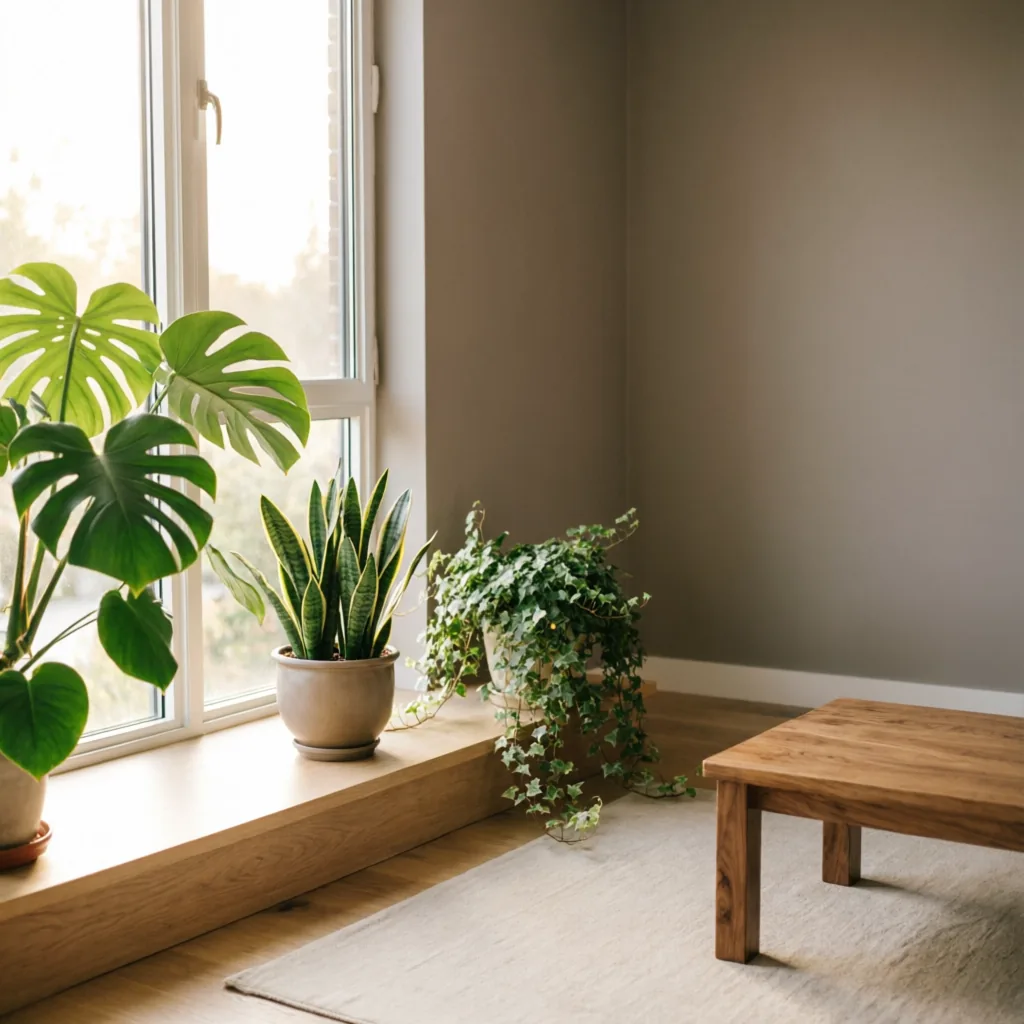
What people notice
Many individuals find themselves working from a makeshift station tucked into the corner of a living room or balanced precariously on a dining table. The surface is often covered with stacks of unpaid invoices, tangled charging cables, and cold cups of coffee that have been forgotten during urgent video conferences. Lighting is frequently an afterthought, relying on a single overhead fixture that casts harsh shadows across the face during calls or creates a glare on the laptop screen. This setup blurs the boundary between professional duties and personal relaxation, making it difficult to mentally clock out at the end of the day. The physical environment feels chaotic, with items piled along the main walkway, obstructing movement and creating a sense of constant friction within the household. When the workspace doubles as a living area, the clutter accumulates quickly, and the room never feels fully at rest. This common scenario reflects a lack of dedicated zoning, where work materials invade spaces intended for dinner or family time. The visual noise of open shelves filled with binders competes with the comfort of a sofa nearby. It is a widespread situation where the home office feng shui focus is compromised by the sheer density of objects and the absence of a defined boundary between labor and leisure.
Why it becomes a problem
This arrangement leads to significant distractions that decrease productivity throughout the workday. When the desk is positioned without regard for sight-lines, every movement in the living room draws the eye away from the task at hand. Poor desk positioning can lead to a feeling of vulnerability, especially if the back is turned toward a high-traffic area or a door. This constant awareness of surroundings prevents deep concentration needed for complex projects or important client calls. Furthermore, inadequate lighting has a tangible impact on mood and energy levels. Working under dim conditions can induce sleepiness, while overly bright, unshielded bulbs cause eye strain and headaches. The lack of proper illumination makes reading documents difficult, leading to errors that require rework. In a shared space, the inability to separate work from rest means the mind remains in a state of alert even during evening hours. This continuous state of engagement prevents proper recovery, leading to burnout over time. The cost is measured in missed deadlines, frustrated communications, and a lingering sense that work is never truly finished because the physical evidence remains visible in the living space.
The root cause
The underlying issues often stem from specific layout issues such as desk orientation and proximity to windows. Placing a desk directly in front of a window might seem ideal for natural light, but it often creates severe backlighting that obscures the face on video calls. Conversely, having a window directly behind the monitor causes glare that forces the eyes to work harder to distinguish text. Consider the effects of poor airflow and lighting on comfort and focus. Modern observational notes indicate daylight exposure is associated with mood and sleep regulation, suggesting poor light affects energy. Stagnant air in a closed corner can make the space feel heavy and lethargic, reducing mental alertness. If the desk faces a wall with no view, the energy feels blocked, limiting the sense of opportunity and forward movement. Layout issues also include the proximity to sleeping areas. When work equipment is too close to where one rests, the association between the bed and stress becomes strengthened. The physical flow of the room matters significantly. If chairs block the path or cables snake across the floor, the circulation of people and energy is interrupted. These concrete factors combine to create an environment where the body is physically present, but the mind struggles to engage fully due to environmental resistance and discomfort caused by the arrangement of furniture and light sources.
The principle behind it
Traditional practice offers guidance through principles like facing auspicious directions for focus. In the Compass School, this involves identifying a personal Sheng Qi direction based on one’s Kua number. Facing this direction at the desk is traditionally associated with focus and opportunity, helping to align personal energy with the workspace. Additionally, the Form School emphasizes the Command Position, where one sits with a solid wall behind for support and a clear view of the door without being directly in line with it. Discuss the importance of balancing yin and yang energies for optimal work environments. Bright, even light is held to enliven yang qi, which is necessary for active work, while dim, gloomy rooms are read as yin-heavy and better suited for rest. Classical texts suggest 陰陽平衡 (balance of yin and yang) to ensure the space supports the intended activity. Evidence from traditional practice indicates that sitting and facing auspicious directions, known as 坐吉向吉, creates a harmonious relationship between the occupant and the room. These principles do not promise specific outcomes but suggest that aligning the physical setup with these patterns may support a more stable and conducive atmosphere for professional tasks.
The solution
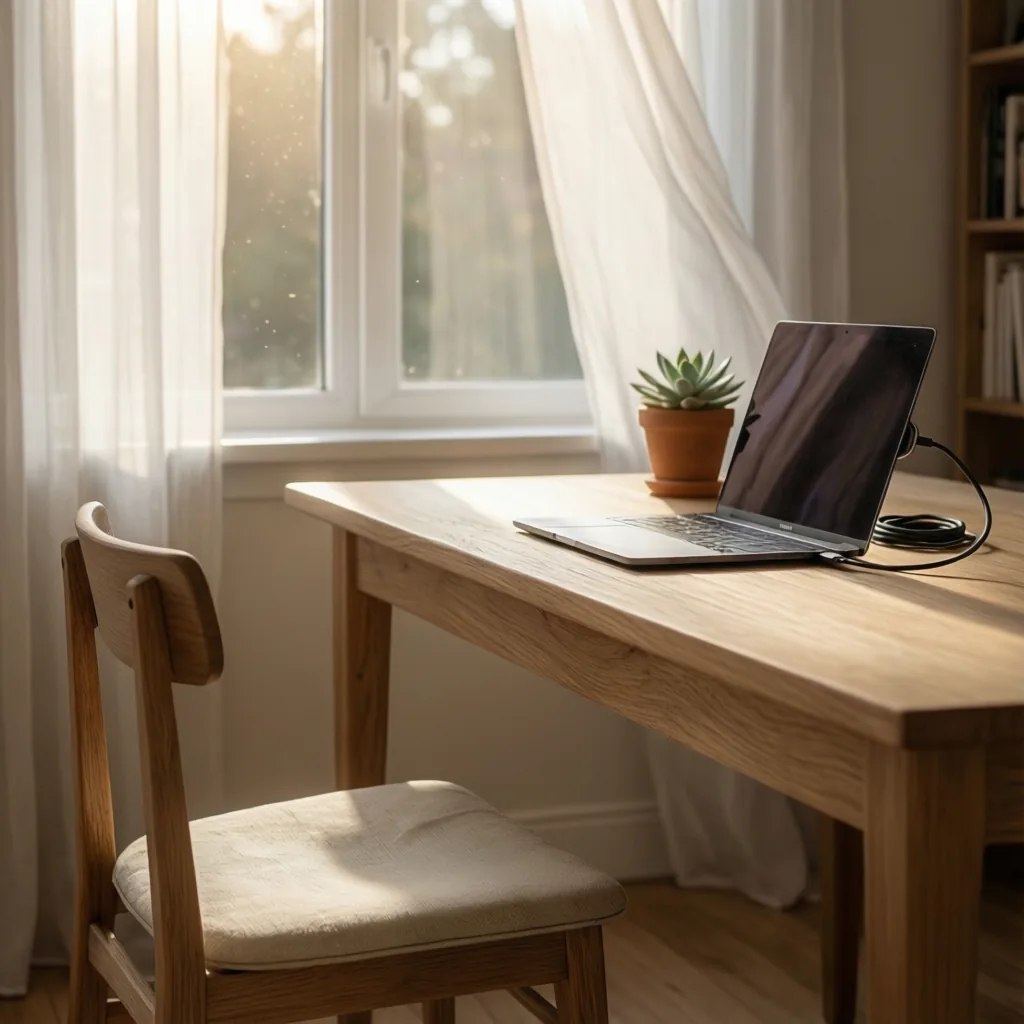
To address these challenges, suggest reorienting the desk towards a personal Sheng Qi direction if the layout allows. This adjustment aims to position the occupant in a way that traditionally supports growth and vitality. If moving the desk is not feasible, adjusting the chair to face the most favorable available direction is a viable alternative. Recommend layered lighting to enhance natural light and reduce glare. Instead of relying on a single harsh overhead source, combine ambient, task, and accent lighting. A desk lamp with adjustable brightness provides task lighting for reading, while floor lamps can soften the corners of the room with ambient light. Use sheer plus opaque layers to control daylight, privacy, and external views. This allows natural light to enter without creating screen reflections. Managing screens and cables is also essential. Charge devices away from the immediate work zone if possible, or enable sleep mode to reduce visual agitation. The strategy involves ordering efforts by difficulty: first, clear the clutter to open flow; second, adjust lighting layers; and third, reorient the desk. This approach ensures that the environment supports the activity without requiring structural changes to the home. Additionally, use cable clips or sleeves to bundle wires, preventing them from snaking across the floor where they can trip occupants or collect dust. Choosing warm-white bulbs for ambient light and cooler tones for task lamps helps distinguish between relaxation zones and work zones within the same room. Illustrative cases from editorial composites show that zoned decluttering restored walkways and reduced household friction. These adjustments work together to create a defined boundary that signals to the brain when it is time to focus and when it is time to rest.
How to put it into practice
Provide step-by-step instructions for adjusting desk placement and managing cables. Begin by measuring the room to identify the wall that offers a solid backing without blocking windows. Move the desk so the back is supported, then check the sight-line to the door. Offer renter-friendly options like using curtains for privacy and light control. Tension rods can hold curtains without drilling holes, creating a visual screen between the work zone and the living area. For cable management, purchase adhesive hooks that can be removed without damaging paint. Route cables along the leg of the desk and secure them every thirty centimeters. Rough cost levels vary; adhesive hooks are low cost, while a quality task lamp is a moderate investment. To verify it worked, monitor energy levels over two weeks. Note if eye strain decreases or if calls feel less rushed. If the desk cannot move, place a small mirror on the desk to reflect the door view, adhering to Form School remedies for visibility. Ensure devices are charged across the room or in a drawer to reduce visual noise. This execution plan focuses on low-impact changes that respect rental agreements while improving the functional quality of the space. Regularly review the setup to ensure cables have not loosened and lighting bulbs remain functional. This maintenance ensures the adjustments continue to support the intended focus and separation between professional and personal life. When selecting curtains, choose fabrics that block direct sunlight during peak hours to prevent screen washout. For lighting, test different bulb temperatures to find the balance that keeps you alert without causing headaches. Keep a log of daily focus levels to observe trends relative to the changes made. If distractions persist, consider adding a small plant to the corner to soften sharp angles, ensuring it does not block the walkway. These tangible steps allow for iterative improvement without permanent alteration to the property.
An illustrative case
This illustrative composite case is based on [case.kua_alignment] and involves an occupant whose personal Kua group differed from the home’s sitting group. Initially, the individual worked at a desk facing a blank interior wall with poor light, which contributed to a sense of stagnation during long workdays. To address this, the desk was reoriented to face a personal Sheng Qi direction while ensuring a solid wall remained behind for support. They also implemented layered lighting using a floor lamp and a desk task light to reduce shadows and glare. The household reported feeling more settled and experienced fewer contentious moments during virtual calls. This is an illustrative composite built from supplied cases, so no real names or specific figures are invented. The changes involved moving furniture rather than structural renovation, making it accessible for many without high costs. The reported improvement was subjective, relating to comfort and perceived focus rather than measurable financial gain. It highlights how aligning orientation with personal preferences can influence daily experience. The addition of sheer plus opaque layers helped control daylight and privacy, further enhancing the sense of security while working. The occupant noted that morning light felt softer and less draining on the eyes. Low-cost lamps were used to achieve this effect.
What changes after the fix
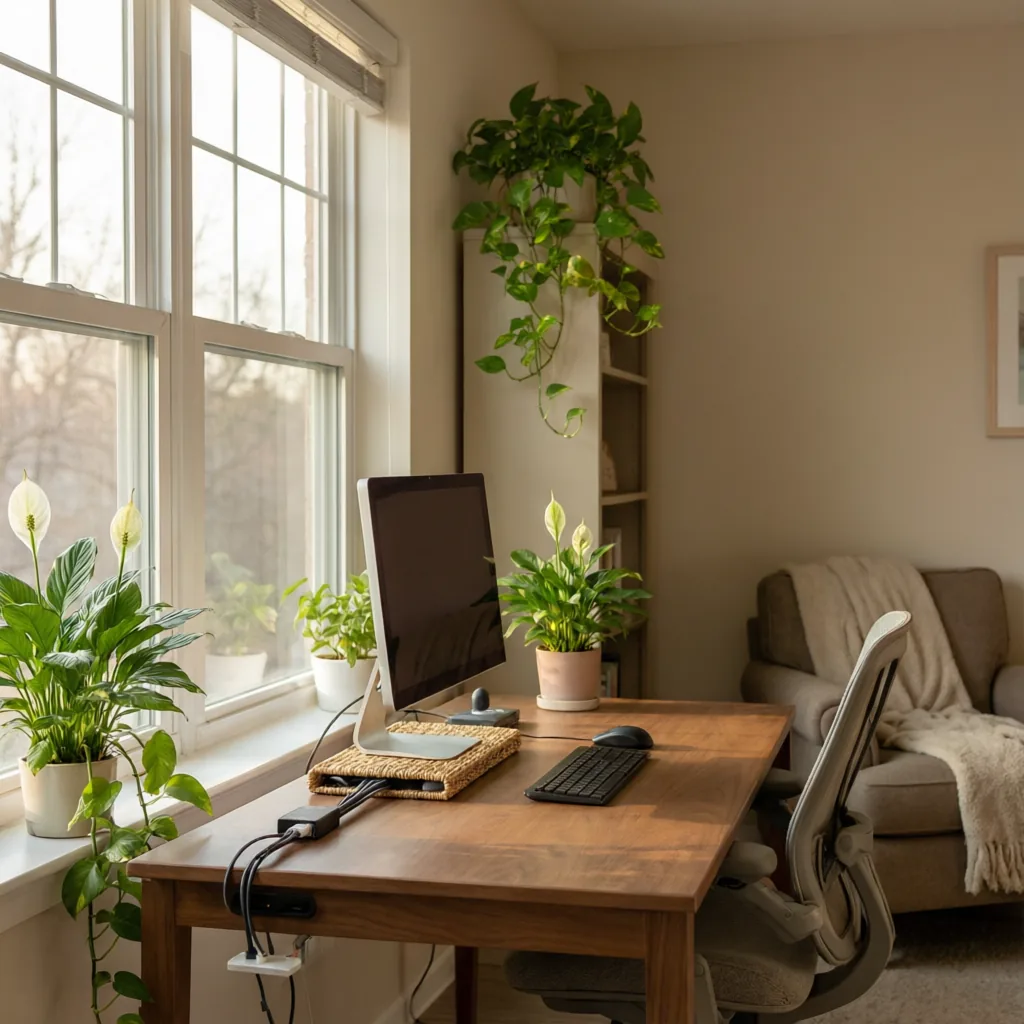
After implementing these adjustments, occupants may notice a shift in workspace ambiance and personal focus levels. The room might feel brighter and more inviting due to better light management and the reduction of harsh overhead sources. Personal focus could improve as visual distractions are minimized and cables are managed using ties to reduce clutter. Glare on screens is reduced, which lessens eye strain during long video conferences and helps maintain attention on tasks. There is a potential for better separation between work modes and rest modes, especially if electronics are managed correctly away from sleeping areas. However, it is crucial to emphasize that outcomes are not assured. Feng shui adjustments support the environment but do not control external business factors or personal discipline. The goal is to create a supportive setting where focus is easier to maintain without promising specific results. Some may feel calmer, while others might notice subtle changes in energy levels throughout the day. The atmosphere becomes more conducive to sustained effort and reduces visual noise. Cable management tools are inexpensive and help maintain this order.
Evidence and sources
[traditional] Traditional practices supporting desk orientation and lighting balance suggest that sitting and facing auspicious directions, known as 坐吉向吉,helps align personal energy with the space. Balance between yin and yang, or 陰陽平衡,is sought through lighting choices to enliven yang qi in the room. [case] Illustrative cases showing perceived benefits of adjustments indicate that when occupants reorient furniture to match personal directions, they often report feeling more settled, though this is anecdotal. These cases serve as editorial composites to demonstrate potential applications without claiming universal truth. [modern] Observational associations between daylight exposure and mood suggest that natural light helps regulate sleep and wakefulness. None of these tiers promise specific results. Modern notes are observational only and do not establish causal mechanisms for wealth or health. Traditional texts offer frameworks for harmony, not scientific laws. Cases are composites used for editorial illustration. Evidence tiers remain separate to avoid confusion between cultural practice and scientific observation. This separation ensures clarity about what is belief and what is observation. No tier claims to be established fact.
Boundaries and counterexamples
Clarify when desk orientation may not be feasible due to room layout constraints. In small apartments, the door position or window placement might prevent facing the ideal direction without blocking circulation or creating safety hazards. Discuss factors that could exacerbate issues, like excessive screen time before bed. Even with perfect desk placement, keeping devices near the sleeping area can agitate resting qi and delay sleep onset. This principle relates to [bed.electronics] and suggests charging phones across the room. If the workspace is in the bedroom, physical separation becomes harder and requires covers or screens. A counterexample would be placing the desk directly under a structural beam or facing a sharp corner, which traditional practice advises against. Renters must also consider lease restrictions on drilling or painting walls. Honesty about limits ensures readers do not feel frustrated if structural changes are impossible. Some rooms simply do not allow optimal orientation due to fixed architectural elements. Repairing damage from drilling can cost money.
Conclusion
Summarize key takeaways: desk orientation, lighting, and separation of work/rest areas. Position the desk with a solid wall behind and favorable sight-lines to support stability. Use layered lighting to avoid harsh shadows and balance the room energy. Keep work devices away from the bed to support rest and reduce mental agitation. Suggest a single actionable next step for readers. Move the desk slightly to check the view and light quality today. This small shift costs nothing but may improve the feel of the room immediately. Remember that home office feng shui focus is about creating conditions for better work, not supernatural forces. Consistency in maintaining these arrangements matters more than one-time fixes. Focus on what is within your control, such as cable management and lamp placement. Small adjustments accumulate over time to create a more harmonious environment. This step takes only five minutes.
FAQ
Can I apply these tips if I rent my home?
Yes, most remedies like moving desks or adding lamps are renter-friendly and require no permanent changes to the property structure. You can use adhesive hooks for cables instead of drilling.
Does facing a specific direction ensure better income?
No, orientation supports focus but does not ensure financial results or business success in any way. It is about environment, not outcome.
What if my office is in my bedroom?
Use screens or covers to hide work items during rest times to separate work from sleep and protect rest quality. Charge devices away from the bed.
Want this applied to your address? The free score gives a quick read; the personal report works through your layout, facing and rooms in detail.
Related guides
- Feng Shui Home Office Guide: Science-Backed Hacks for Focus, Abundance, and WFH Wellness (No Cheesy Cures Needed)
- How to Pick the Best Layout for Your Awkward Area: A Decision Framework When You Can’t Decide Between Multiple Designs
Guidance only — feng shui is a traditional practice and no outcome is guaranteed. Apply what fits your home and budget.